C’est un dossier pertinent du magazine Marianne qui pointe ce que j’explique déjà depuis quelques années à notre aimable communauté de lecteurs et en particulier aux Stratégistes !
En effet, dans l’approche patrimoniale d’indépendance financière et de « bonne » gestion, ou disons de gestion efficace il ne faut surtout pas faire l’impasse sur la Localisation.
Dans ma méthode j’utilise le trigramme PEL pour patrimoine, emploi et localisation qui sont les 3 paramètres sur lesquels vous pouvez agir.
Ainsi, désormais, à Paris, il faut gagner 14 559 euros net par mois, oui vous avez bien lu, net, soit globalement plus de 20 000 euros bruts pour pouvoir s’acheter un 100m² ! Alors 100m² cela peut faire rêver une famille francilienne, mais cela fait sourire de nombreux ruraux. A ce niveau de salaires, même les cadres ne peuvent plus acheter à Paris et sont exclus par les prix.
En termes d’approches vous avez plusieurs choix. Celui de la fuite en avant dans la pression professionnelle du toujours gagner plus additionné au toujours plus de dettes et aux crédits de plus en plus élevés. Soit celui de la fuite de la capitale pour aller vous loger ailleurs.
Là où les choses deviennent passionnantes c’est quand on commence à calculer qu’un couple gagnant 6 000 euros dans certaines villes dispose d’un niveau de vie supérieur et de beaucoup à un couple gagnant 14 500 euros à Paris !
Vous pouvez multiplier les exemples.
A l’heure de la crise aussi bien sanitaire qu’économique, à l’heure du télétravail, et de la digitalisation de la société, c’est le moment de réfléchir à votre triptyque PEL.
Selon cette dépêche de l’AFP reprise par le site 20 minutes, une PME sur deux craint de ne pas pouvoir « supporter un troisième confinement » !
Sans blague !
En voilà une surprise.
Nous sommes vraiment gouvernés par des vedettes et des « as » !
C’est une enquête qui a été réalisée par la Confédération des petites et moyennes entreprises (CPME) auprès de ses adhérents.
« Sur 2 400 dirigeants de PME et de très petites entreprises (TPE) interrogés, 54 % se déclarent « inquiets sur la pérennité de leur entreprise », contre 47 % lors d’une précédente enquête en septembre ».
« Interrogés sur l’évolution de leur chiffre d’affaires en novembre et décembre 2020 par rapport à la même période de 2019, les deux tiers (65 %) disent qu’il a baissé, un sur cinq qu’il est stable et 15 % font état d’une hausse ».
« Concernant leurs effectifs, ils sont en baisse dans 30 % des cas, stables dans 61 % des entreprises et en hausse dans 9 % ».
« Pour 2021, les perspectives sont mitigées, mais pas catastrophiques. Si 52 % des répondants prévoient une baisse de chiffre d’affaires dans les prochains mois, 48 % anticipent un maintien ou même une hausse », relève l’organisation patronale dans un communiqué. « De même, si 25 % envisagent de réduire leurs effectifs, 66 % pensent le maintenir et 9 % prévoient de recruter », poursuit la CPME« .
Que retenir de ces chiffres ?
Simple.
Les perfusions de l’Etat sauvent la situation. Un confinement sans perfusion serait un scénario noir pour nos entreprises qui chuteraient par dizaines de milliers.
Le problème, le vrai, c’est l’effet Gilette !
Vous vous souvenez de cette publicité pour le rasoir à 3 lames, une grande innovation des années 90 !
La première lame soulève le poil, la seconde coupe le poil et la troisième, et bien la troisième je n’ai jamais compris à quoi elle servait vraiment.
Pour les confinements c’est la même chose mais là j’ai compris !
Le premier tue les plus fragiles.
Le second tue les déjà un peu malades.
Le 3ème, rend malade les bien portants !
Pour aller plus loin pour ceux qui ne l’auraient pas lu.
Cette nouvelle nous vient du chef économiste du FMI Gita Gopinath qui d’après ces dernières estimations pense que le PIB mondial sera amputé de 22 000 milliards de dollars entre 2020 et 2025.
C’est une somme considérable, et comme il faut le dire dans cette pandémie nous parlons toujours en précisant « à ce stade », car à ce stade si l’on écoutait nos prévisionnistes, la crise allait durer le temps d’un confinement, d’une vaccination et tout rentrerait dans l’ordre.
Sauf que ce n’est pas ainsi que les choses semblent se passer et ce virus ne semble pas plus avoir envie de disparaître avec l’été et la chaleur.
Pour l’économiste en chef du Fonds monétaire international il s’agit d’une « perte cumulée » qui est à comparer avec le niveau du PIB mondial que le FMI avait estimé avant la pandémie, a précisé Gita Gopinath en présentant les dernières prévisions économiques mondiales. L’impact est donc « substantiel », a-t-elle commenté.
« Gita Gopinath a souligné que « le fardeau de la crise » est supporté de « manière disproportionnée » par les personnes les moins qualifiées, les femmes et les jeunes, rappelant que les progrès réalisés en matière de lutte contre la pauvreté avaient été inversés ».
Cette dernière observation est tout à fait vraie. Raison pour laquelle, je suppose, le FMI, toujours dans son rôle de père fouettard, va nous demander à tous des efforts, de l’austérité, des hausses d’impôts et des baisses des dépenses afin de « restaurer » les finances publiques… comme en Grèce en 2011 !
Cette nouvelle nous vient du chef économiste du FMI Gita Gopinath qui d’après ces dernières estimations pense que le PIB mondial sera amputé de 22 000 milliards de dollars entre 2020 et 2025.
C’est une somme considérable, et comme il faut le dire dans cette pandémie nous parlons toujours en précisant « à ce stade », car à ce stade si l’on écoutait nos prévisionnistes, la crise allait durer le temps d’un confinement, d’une vaccination et tout rentrerait dans l’ordre.
Pour l’économiste en chef du Fonds monétaire international il s’agit d’une « perte cumulée » qui est à comparer avec le niveau du PIB mondial que le FMI avait estimé avant la pandémie, a précisé Gita Gopinath en présentant les dernières prévisions économiques mondiales. L’impact est donc « substantiel », a-t-elle commenté.
« Gita Gopinath a souligné que « le fardeau de la crise » est supporté de « manière disproportionnée » par les personnes les moins qualifiées, les femmes et les jeunes, rappelant que les progrès réalisés en matière de lutte contre la pauvreté avaient été inversés ».
Cette dernière observation est tout à fait vraie. Raison pour laquelle, je suppose, le FMI, toujours dans son rôle de père fouettard, va nous demander à tous des efforts, de l’austérité, des hausses d’impôts et des baisses des dépenses afin de « restaurer » les finances publiques… comme en Grèce en 2011 !
Prime Minister Boris Johnson and Chief Medical Adviser Chris Whitty held a press conference yesterday in which they marked the grim milestone of 100,000 UK dead with COVID-19. Isabel Hardman in the Spectator has the details.
The Prime Minister offered his “deepest condolences to everyone who has lost a loved one”, and promised that “when we have come through this crisis, we will come together as a nation to remember everyone we lost, and to honour the selfless heroism of all those on the front line who gave their lives to save others”. He also pledged that “we will make sure that we learn the lessons and reflect and prepare”.
This was the closest the Prime Minister came to talking about taking responsibility for the high death toll. He also insisted that “we did everything that we could to minimise suffering and minimise loss of life in this country”. Later, both he and Whitty reflected on the sort of lessons they’d already learned. For Johnson, it was more about what the UK had now developed, such as effective PPE supply chains, and testing. These are not really lessons learned, and Johnson will know that.
Whitty was rather more constructive, saying scientists didn’t initially appreciate the importance of asymptomatic transmission, that they hadn’t supported widespread mask-wearing initially, and that doctors had learned clinical lessons about treating the virus.
What Johnson has said this evening, about the need to learn lessons and the Government doing everything it could, might work as a holding line. But when the public inquiry is held, it will presumably examine the speed with which he took decisions, whether he treated the pandemic with the seriousness it merited from the outset, and whether the claims that ministers have repeatedly made about “putting a protective ring” around the care sector, for instance, are at all accurate. When those details are picked over and there is no immediate crisis to deal with instead, the line “we did everything we could” may look more like an aspiration than reality.
It’s depressing that the main criticisms being made of the Government are that restrictions were not imposed early enough and hard enough, and the main lessons are the supposed value of masks and the putative role of asymptomatic infection in driving transmission – none of which have much in the way of evidence to back them up. No sign of reflection on whether lockdowns are really effective or worth it, or whether test and trace measures for an endemic virus are really a sound idea.
Allison Pearson has written an excellent piece in the Telegraph marking the milestone.
Everyone has their breaking point, a moment when you say: “Enough, I can’t take any more.” Mine came during one of Clive Myrie’s special reports for BBC News from the Royal London Hospital. I say reports, but this was more like an expressionist horror film. Over deeply distressing scenes, Myrie intoned a doom-laden prose poem complete with deadly refrain: “We’re all scared.”
“We’re all scared,” he said as the camera panned over some poor patient (“Asif lies limp”). “We’re all scared,” he said as we got a chilling, bird’s-eye view of a freshly dug grave complete with gravedigger, one of many in a muddy cemetery of recent burial mounds. “We’re all scared,” he said as – I can still hardly believe this – the crew followed a body on a trolley into the morgue.
“Dying and dying and dying,” chanted Clive, just in case any viewers were still clinging by their fingertips to the fact that the vast majority of people who get Covid make a full recovery, even those who are admitted with the virus to hospital. If you weren’t scared before Myrie’s reports then they made damn sure you were whimpering behind the sofa afterwards.
Allison isn’t scared, she says. She’s angry.
So let’s conveniently shelve the fact that official figures yesterday showed another 800,000 people out of work (2.6 million and climbing). And that urgent breast cancer referrals were down a horrifying 32.6% last year, compared with January to November 2019. When it’s the turn of those women, many of an age to have young families, to go to the cemetery, I trust Myrie and the team will be there to record the epitaphs on their gravestones: “Loving wife and mother, died too young from lockdown.”
As the UK passes the undeniably grim milestone of 100,000 Covid deaths, the equally dismaying consequences of shutting down society become more apparent by the day. The response of both TV news and Government is to double down on the doom. Even as a group of 47 leading psychologists writes to the British Psychological Society claiming this amounts to a strategic decision “to inflate the fear levels of the British public”, which it states is “ethically murky, morally questionable” and “has left people too afraid to leave their homes for medical appointments”.
Recent public information included a radio advert which said: “Someone jogging, walking their dog or working out in the park is highly likely to have COVID-19.” Eh? After being contacted by the Advertising Standards Authority, the Cabinet Office said the disputed claim (aka baseless rubbish) will not be repeated. I should hope not.
Almost the worst thing is that it is all so counter-productive. When the Prime Minister warned at a Downing Street Press briefing on Friday that the new variant “may increase” the Covid death rate by 30% (a “may” that was unravelling into a “maybe not” within 24 hours), all he did was give more ammunition to his enemy, the teaching unions. They must have been rubbing their hands; even more reason to claim that their members are not “safe” and schools shouldn’t reopen until September. That’ll be September 2023, knowing them.
She reports on the launch of HART, the new SAGE-like group that has its feet firmly grounded in the real-world evidence.
It is cheering to report, therefore, that after months of dubious science and dodgier predictions, a new group of eminent doctors, scientists, economists and psychologists have come together to form HART, the Health Advisory and Recovery Team and an alternative to SAGE, which aims to provide context, perspective and balance on the Covid crisis. Will the BBC give any airtime to this thoughtful bunch who want to chart a positive path out of a nightmare which is doing so much damage to young and old? Or will its reporters be too busy down the morgue?
Unemployment in the three months to November hit 5%, meaning an estimated 1.7 million people are out of work, a 0.6% rise on the previous quarter. Kate Andrews in the Spectator takes a closer look.
The gradual climb suggests that the furlough scheme continues to hold off mass redundancies and provides further evidence that England’s second national lockdown didn’t hit as hard as the first. But the unemployment rate is set to worsen before it improves, with more optimistic forecasts estimating a peak of around 6% later this year, while others (including the Bank of England) estimate around 8%. Compared with the euro area’s 8.3%, the UK’s unemployment figures are low but still serve as yet another reminder that the effects of lockdowns will linger, even once vaccines brings an end to restrictions. It is inevitable that some jobs will no longer exist once furlough ends after the best part of a year.
Some apparently encouraging signs are not all they seem.
Earnings growth, for example, is back to pre-pandemic levels. But it’s a selective recovery: according to the ONS, the figures have been pushed up “by a fall in the number and proportion of lower-paid jobs compared with before the coronavirus pandemic”. In other words, the figures for earnings growth have shot up so quickly in large part due to people in low-paid work having lost their jobs.
All the while, the numbers claiming unemployment-related benefits continue to hover at record highs, hitting 2.6 million in December (an increase of 113.2%, or 1.4 million, since last March). The longer the economically damaging measures that defined last year continue, the harder the path to recovery becomes.
Stop Press: Geoff Colvin in Fortune writes that the Covid recession may kill more Americans than COVID-19 does:
The economic effects of COVID-19 could prove deadlier than the disease itself.
So says just-released research, which concludes that the total lives lost to the virus in the U.S. may “far exceed those immediately related to the acute COVID-19 critical illness… The recession caused by the pandemic can jeopardise population health for the next two decades.”
The new working paper, by authors at Duke University, Harvard Medical School, and the Johns Hopkins University Business School, focuses on the almost instantaneous unemployment of millions of workers in March and April. The unemployment rate jumped from nearly the lowest in 50 years to the highest since the current measurement system began in 1948. While it has come down, it’s still at its highest rate since the recovery from the 2008–09 financial crisis.
Where Are We Going?
We’re publishing a new essay today by regular Lockdown Sceptics contributor Guy de la Bédoyère taking a look at the year ahead and what’s likely to happen. His initial thoughts were confirmed, he says, when he heard an interview with two senior scientists yesterday on Radio 4.
BBC Radio 4’s World at One on January 26th interviewed Professor Sir Mark Walport, former Chief Scientific Adviser, and Professor Adam Kucharski, an epidemiologist at the London School of Hygiene and Tropical Medicine. Everything they said assured me that what I have laid out here is broadly in line with the way the Government is both being guided, and is viewing, the next six months to a year. That includes the continuing high levels of hospitalisation, despite reductions in deaths, and therefore the belief that measures must stay in place.
(13m 19s in) Kucharski: “I think the hope is that obviously vaccines can massively reduce the risk of death, but then you’ve got the issue of a large number of people at risk of hospitalisation and ICU, so even if deaths in, say, the oldest group start to come down from vaccination there’s still potentially a really substantial disease burden that could happen in the near future if cases were to climb again.”
Walport, when asked why the UK has had so much death, didn’t pull his punches: “The answer is that we’re in a club that no country wants to belong to of a group of countries, typically liberal democracies, European countries, Spain, Italy, Belgium, France, Germany’s having troubles at the moment. And the reality is that with a highly transmissible virus unless you restrict people’s liberty very, very strongly indeed, it’s countries such as the UK are fertile ground for the virus to spread.”’
Sarah Montagu: “That doesn’t quite explain it, does it? The numbers here compared with Germany are so much higher.”
Walport: “That’s true. I mean, I think one’s got to look back to the beginnings of this and of course what happened in the UK, and the UK is globally highly connected country, and if you look at the sort of cities in the world that have done worst, they are the globally connected cities, Brussels, New York, London. So, we were sort of sitting ducks in a way and of course what happened in February half-term was that the infection was brought in, distributed very widely across the UK by people returning from their half-term holidays in Italy, France and Spain where it was picked up so we were unlucky in the sense that it was seeded geographically very widely across the UK. But the truth is that historians are going to be looking at this for years to come and in a way I think there’s, sort of, looking back there’s going to be plenty of public enquiries. The real challenge at the moment is to actually make sure that we don’t continue losing enormous numbers of people to this dreadful infection.”
There you have it: we’d have been alright if Britain wasn’t an internationally connected nation (now more important than ever), didn’t allow its citizens to go on holiday, and wasn’t a liberal democracy. Why didn’t anyone think of those before? Another member of the scientists’ club in favour of totalitarian government?
When asked to predict the future, Kucharski was upbeat that deaths would come down “quite soon” but warned that we can’t relax measures too soon in case of overloading hospitals. Ominously, he warned that later in the year countries are going to have to decide what to do in terms of the “level of additional measures” they want to keep on in addition to the vaccines.
Let’s hope other voices win out over the closet totalitarians.
“All Businesses, Schools, Do Need to Get Back to Normal Life at Some Point” – ICU Doctor on the BBC
Is that the sound of the tide beginning to turn, or is it just wishful thinking? A reader has sent us a transcript of a segment he heard last night on BBC World News where an emergency doctor in Los Angeles, Dr Mizuho Morrison, told the interviewers, Katty Kay and Christian Fraser, that the time had come to “get back to normal life”.
They start off discussing the new California variant and the fact that California is lifting the stay at home order.
Dr Mizuho Morrison: I think the one thing I want to point out is that it’s easy for us to get distracted and lost with all the hype and pandemonium, and honestly what we’re seeing much more in the emergency department and the acute health care settings is so much anxiety and depression-based reactions. And I think it’s this constant threat and so framing it I think is very important and making sure that, you know, does it really change our outcome, and if the answer’s no…
Christian Fraser: …it’s fatigue isn’t it really? We’re just so tired of it all
MM: We’re so tired of it, everyone is just so…
KK: You know this, the UK is still in lockdown and yesterday Governor Newsom announced that California is coming out of its stay at home order. Do you think he’s right to be lifting the restrictions with this new more transmissible strain in the state?
MM: I think it’s okay… it’s important that we are cautious, right? At this point we are seeing a trend, a very big difference in our Covid tent patients, typically I like to call the ‘walking well patients’, versus our ICUs. So our cases are certainly coming down. That’s great and let’s be honest, all businesses, schools, do need to get back to normal life at some point. Our ICU beds will eventually trickle down. There’s usually a bit of a lag. But I do think it’s time to lift. At some point we have to say enough is enough. We do have to go back to real life. Really it comes down again to the risk versus benefit. I do think that the efforts of driving the vaccination efforts are critical at this point. We can’t go as slow as we’re currently going.
CF: If there’s going to be a new variant every three or four months, people say to me how long are we going to do this because, you know, we can’t lock down forever. At some point we have to get on with it. If there’s a variant that’s going to be resistant to the vaccine – maybe we just have to live with that?
MM: That’s a very good point. And exactly to your point – does it change anything? Meaning, let’s say you’re vaccinated and you’re going to have some type of immune response, right? You’re going to have something. Having some type of immunity, antibodies, is better than not being vaccinated at all. And really the question is, does this new strain mean I could die? Do I have a greater chance of death? And if the answer is no, to your point, we need to get back to real life… if we perseverate time and time again over every little strain, life will never go back to regular living… Most of the patients that we’re seeing now… the critical care that we’re doing is from patients who have been neglected all year, who haven’t seen their physicians, oncologist, they’re coming in to the emergency department because they can’t wait any more… cancer, they have kidney failure to the extreme, heart failure, to the extreme. We really have to ask ourselves, public health-wise, have we done the best efforts here?
Postcard From Bangkok
Lockdown Sceptics reader Rick Bradford has written to us from Thailand, where despite a super-low death toll the country is in the grip of Covid hysteria.
At first glance, there are many similarities between the progress of the Covid pandemic in Thailand and in the UK. Grim-faced ministers, surrounded by medical experts dressed in white lab coats to indicate authority and competence, appear on TV and announce a raft of restrictions on travel, restaurants, alcohol sales, beaches, markets and entertainment venues, the severity of which rely almost entirely on the number of new positive Covid tests recorded the previous day. The strategy is inconsistent and incoherent, and subject to reversal at whim.
There is a familiar sense of hapless Government apparatchiks, bewildered by having to work with numbers, and relying on a motley selection of self-styled experts who also don’t know what is going on. The mantra of “We must do something, this is something, therefore we must do it” is heard as loud in Bangkok as it is in London. The Thai population, like the British, has been scared into regarding COVID-19 as something akin to the Black Death.
But there is one glaring difference between the situation in Thailand and that in the UK. Thailand, with a steady influx of Chinese tourists, was one of the first countries to see infections caused by COVID-19, in January last year.
In the year since then, Thailand has recorded an overall death toll from Covid of 72. Not 72,000, but 72, from a population slightly larger than the UK’s. To put that in perspective, more Thais die on the roads each day than have succumbed to Covid in all of the past 12 months. In fact, all-cause mortality in Thailand in 2020 was expected to be greatly reduced as travel restrictions dented the normal carnage on Thai roads, which claims over 25,000 lives a year.
Covid, for some reason, has not caught on in Thailand. This is not to suggest that the Thai government is somehow more than 1,000 times more efficient than the UK Government.
There are many factors at play. Thais are drenched every day in vitamin D from a relentless sun, the temperature rarely drops below 20 Celsius and is usually in the mid-30s, plus the population is younger than the UK’s, especially regarding the highly vulnerable geriatric category. There is also a much lower prevalence of obesity and Type-2 diabetes. This apparent high level of metabolic health occurs while Thailand spends £180 per person per year on its health system, almost 20 times less than the UK (£3,200). Thais may also benefit from a higher degree of prior immunity owing to earlier similar outbreaks, such as the SARS outbreak of 2003 which was quite localised to Asia.
So the impact of Covid on Thailand has been almost entirely economic. The tourist industry, which in 2019 comprised over 10% of Thailand’s economy, has been shredded. Several million Thai workers have lost their jobs, and familiar tourist haunts such as Pattaya and Koh Samui are ghost towns, unlikely to fully recover.
But the Government seems undeterred by the loss of perhaps £36 billion in annual tourism revenue and is pushing ahead with grandiose redevelopment plans, such as the expansion of the main international airport (which has lain empty for one year), a high-speed rail network which nobody can afford to take, and most ambitious of all, a space programme with an aim to travel to the moon within the next seven years.
Given the chronic problems besetting Thailand’s economy, it is not surprising that many commentators have expressed a preference that Thailand’s first visitor to the moon should be General Prayut Chan-ocha, Prime Minister, and holder of the Knight Grand Cordon (Special Class) of The Most Exalted Order of the White Elephant.
It seems fair to conclude that there is little point in comparing the death toll between different countries and drawing conclusions from the data. Both the UK and Thailand have incompetent governments which have trashed their respective economies for no apparent good reason.
Whether their interventions and restrictions have had any impact on the trajectory of the Covid pandemic in their countries is something that will no doubt be debated for many years.
A lawyer and Lockdown Sceptics reader in America has got in touch to say it’s good news that America appears to be opening up again (as Jeffrey A. Tucker explains here). But in truth, much of the country has been open for months.
I sometimes feel bad about this and therefore don’t comment, but there are vast swaths of the U.S. that are essentially already open. I have not worn a mask (except at the doctor’s office) at all, ever. My court (i.e. judge) has bought into the Covid hysteria hook, line and sinker. I’ve had arguments about it (we’re all Zoom right now) several times and have been shut down every time. We are home-schooling our kids, rather than sending them to school (their private school is open) with masks on, and we’ll send them back as soon as this garbage ends. But, to be perfectly honest, we have been living our lives pretty much as normal. Our kids played baseball (against the Governor’s orders) last summer, and they’re still playing. The kids still get together with friends, and they’re doing a “home-school” art class with several other families. We’ve eaten out at restaurants that refuse to close. We have spent a lot of time in Idaho, where we have family, and though it is not as open as South Dakota, it is pretty open (again, no mask mandate). Not only did we spend Thanksgiving and Christmas mingling with several households, we’ve never stopped visiting friends and doing pretty much everything we would otherwise do. So much so that I am sometimes taken by surprise when I am reminded of these stupid regulations (I was banned from Costco and have been confronted by obnoxious workers a very small handful of times in various places over the past year). What I read about your country is absolutely horrifying.
The reality of the situation, though, is that we currently have tons of data if anyone was actually interested. There are so many places in the US that are wide open (or ignoring regulations), and plenty that seem to be as locked down as the UK (Seattle, which is two hours away from my home, comes to mind). If anyone was willing to perform actual science, there are enough natural experiments to fill a dozen journals. But we all know what the data shows. If Democrats can spin this in a way that allows them to declare victory on behalf of Biden, they will absolutely do so.
I do worry about masks and restrictions, though. Essentially, the Government has discovered that it can get away with a complete shredding of our constitution, with barely a peep from conservatives. They are unlikely ever to give that back unless we force them to.
But, as we do open up more officially, maybe we’ll start to hear people who are willing to speak out.
How Urban is Sweden?
A reader has pointed out that lockdown witch-hunter Neil O’Brien MP made a factual error of his own in his December New Statesman piece on Sweden. He writes: “First, [Sweden is] a far less urban nation than the UK, for example, and the virus spreads much more rapidly in dense, built-up areas.”
In fact, by the country’s own reckoning 87.7% of people in Sweden lived in urban areas in 2019. In contrast, that figure for the UK is 83.7% as of 2019.
I reported these figures in my story on Sweden on Sunday. However, another reader got in touch since then to say the problem with these figures is there’s no standard definition of urban. The Swedish definition is anyone who lives in a town of at least 200 people, whereas the UK threshold for “urban” is 50 times higher at 10,000. This means the figures aren’t really comparable, despite them being presented as such by the UN.
Through a bit of our own research we found that in 2018 63.5% of Swedes lived in towns or cities of 10,000 or more, so are urban by the UK definition. This is admittedly somewhat less than the UK’s 83.4% figure for 2018, so may affect the virus spread dynamics to a degree. But Sweden is still a highly urbanised society with nearly two thirds of its inhabitants living in towns of 10,000 or more people.
Italy uses the same definition as the UK and it was 70.4% urban in 2018. This is not much higher than Sweden and considerably less than the UK, but that difference did not prevent Italy from being among the worst affected countries in the world for Covid last year.
You Can See Your Friends
A Lockdown Sceptics reader, Adam Collyer, has written in with a suggestion for young people who want to see their friends.
I read the heart-breaking piece in yesterday’s Lockdown Sceptics headed “Poetry Corner”, about the 14 year-old boy who was worried he would never see his friends again. I have seen many similar remarks on Twitter about teenagers worried about this.
I believe the Government’s continuous “stay at home” messaging has obscured the fact that people are allowed out to take exercise, and they are allowed to do so with one person not from their household. It is therefore perfectly legal for a 14 year-old boy to walk with one of his friends in the park, or kick a football around for example. I am concerned that many young people may be sitting alone at home all day, when it is perfectly legal for them to meet with their friends (one at a time) in this way.
–by yourself –with the people you live with –with your support bubble (if you are legally permitted to form one) –in a childcare bubble where providing childcare –or, when on your own, with one person from another household
This includes but is not limited to running, cycling, walking, and swimming.“
Incidentally, the two metre distancing is a guideline and not the law, so this shouldn’t cramp their style either!
I think by highlighting this, you might help prevent a young person going over the edge
Allant à contre-courant de la paranoïa des gouvernements occidentaux, Vladimir Poutine a annoncé ce jour le retour à la normale en Russie :
« En Russie, la situation avec le coronavirus se stabilise ; les restrictions imposées en lien avec la pandémie peuvent être progressivement levées. En général, la situation épidémiologique dans le pays se stabilise progressivement. Ce matin, j’ai écouté les rapports : nous avons déjà le nombre de guéris supérieur au nombre de malades. Le nombre de personnes infectées diminue, il est à moins de 20 pour mille. Cela permet de supprimer soigneusement les restrictions imposées. »
Actuellement dans la plupart des régions de la Fédération de Russie il y a déjà très peu de restrictions depuis l’été dernier, comparativement aux pays occidentaux : Tous les services et commerces fonctionnent (bars et restaurants doivent dans plusieurs régions fermer à 23 heures… en théorie. En pratique, beaucoup ne ferment qu’à l’aube…). Les seules limitations sont l’obligation (ici aussi très théorique) du masque dans les transports et magasins, et la limitation à 50% du taux d’occupation des cinémas, musées etc. Par ailleurs la population en grande partie ne suit que très peu les consignes stupides: Le masque est peu porté, ou alors sous le menton. Quand aux « distances sociales »… Voici une photo prise il y a quelques jours dans le métro de Moscou…
La portée de la déclaration de Vladimir Poutine est en fait très politique : Elle montre au clan des globalistes en Russie, mené par le maire de Moscou qui désire renforcer les mesures pour s’aligner sur les pays occidentaux, que son petit jeu est terminé. En août, c’est déjà Vladimir Poutine qui avait ordonné au maire de Moscou de lever la quarantaine (Le maire avait reçu un coup de téléphone en pleine réunion pour préparer l’annonce de la poursuite de la quarantaine et avait déjà commencé à faire envoyer des SMS pour en informer la population. Selon un témoin, le maire n’a rien dit durant 2 à 3 minutes, et à la fin de la communication a déclaré que la quarantaine était levée.). La semaine dernière c’est encore le président qui a ordonné au maire de Moscou de cesser l’enseignement « à distance » que celui-ci avait mis en place en octobre pour une grande partie des élèves. Aujourd’hui, le président Poutine déclare donc, au plan national, que les choses ont assez duré.
S’il y a assurément une justification électorale à cette décision, par la chute de popularité du maire de Moscou à 80% de mécontents qui se traduit par la chute de popularité de Poutine avec un énorme 40% de mécontents, ), il semble clair, alors que les pays occidentaux rivalisent de paranoïa pour savoir qui enfermera le plus durement et longuement sa population, que Vladimir Poutine met la Russie en-dehors du plan globaliste. On rappellera par ailleurs les mesures nouvelles que la Russie a inscrites dans sa Constitution (par exemple le mariage = Homme plus Femme exclusivement, la réaffirmation de la foi en Dieu, la prédominance des lois Russes sur les lois internationales, etc) qui montrent clairement le chemin choisi, aux antipodes du projet de société mondialiste.
Le hold-up électoral réalisé par Biden et ses complices aux Etats-Unis va rapidement entraîner l’Europe de l’ouest dans une globalisation à marche forcée. Macron a d’ailleurs fait allégeance à Biden lors de leur premier entretien téléphonique hier. La Russie s’affirmera alors comme un oasis souverain dans un monde fou. C’est d’ailleurs pour éviter cela que les globalistes font le forcing avec les tentatives de soulèvement fomentées par la « 5ème colonne » menée par Navalny et quelques oligarques.
Mais, comme le disait ici-même Konstantin Sergueïevitch : « la Russie a les moyens humains, financiers et militaires, de tracer sa voie quelles que soient les réactions des globalistes. » Dans ce même article, Konstantin Sergueïevitch écrit : « Faute de réaction rapide, demain ou après-demain, le pire est déjà programmé ». La déclaration de Vladimir Poutine ce jour sur la fin de la folie autour du covid montre qu’il y a une réaction, qui devrait être suivie d’autres dans les semaines à venir.
Après un article introductif paru en décembre, François de Lacoste Lareymondie a commencé la semaine dernière à analyser de façon approfondie les dispositions du projet de loi «confortant le respect des principes républicains». Il a souligné que l’objectif du Gouvernement allait beaucoup plus loin que la seule lutte contre le séparatisme des islamistes radicaux : il vise en réalité à subordonner l’exercice de la liberté religieuse à l’ordre républicain, à un ordre républicain bien moins libéral que celui auquel nous étions parvenus. Car le projet de loi rompt de facto l’équilibre instauré dans les années 1920 par les accords conclus entre la France et le Saint-Siège pour rétablir la paix religieuse après la loi de 1905 portant séparation des Églises et de l’État. Avec la seconde partie de son analyse, il entre dans le détail du nouveau régime d’exercice des cultes que le Gouvernement veut instaurer, c’est-à-dire dans le détail des mécanismes de subordination et de contrôle qui seront mis en place si le projet est voté. Que le lecteur s’attende à de grandes surprises !
3. Le nouveau dispositif envisagé par le Gouvernement pour les associations cultuelles : un contrôle administratif étroit et permanent
Sur le fond, en ce qui concerne les associations cultuelles (et donc les associations diocésaines), le projet gouvernemental comporte plusieurs dispositions simplificatrices ou amélioratrices des statuts actuels ; elles sont intéressantes, mais accessoires1. En revanche, le projet soulève cinq difficultés sérieuses :
1. Alors que, jusqu’à présent, la création d’une association ayant un objet cultuel est totalement libre, simplement soumise au régime déclaratif de la loi de 1901, sans contrôle de l’administration sur les statuts et l’objet, le projet institue une obligation de déclaration spécifique de la qualité cultuelle de l’association à faire auprès de l’administration préfectorale, assortie de documents justificatifs, préalable à l’obtention des avantages financiers et fiscaux dont cette qualité est assortie2.
2. Cette obligation déclarative est assortie d’une faculté d’opposition donnée au préfet : c’est une grande nouveauté. Actuellement, la qualité cultuelle d’une association dépend de la seule volonté des fondateurs. Désormais, il reviendrait au préfet de la vérifier, avec le pouvoir de s’y opposer et de refuser le bénéfice des avantages corrélatifs, non seulement si elle ne remplit pas les nouvelles conditions qui résultent des articles 18 et 19 de la loi de 1905, mais aussi pour un «motif d’ordre public». Compte tenu de la pratique administrative habituelle d’exercer son pouvoir par le biais des documents justificatifs innombrables à fournir chaque fois qu’un avantage est sollicité, et surtout de l’extension considérable donnée à la notion d’ordre public au cours des dernières années – jusqu’à y englober la politique sanitaire –, voilà une porte largement ouverte à un certain arbitraire. En principe, objectera-t-ton, la faculté d’opposition serait enfermée dans un délai de deux mois après la déclaration. Mais, s’il a laissé passer ce délai, le préfet pourra encore revenir en arrière et retirer cette qualité après mise en œuvre d’une procédure contradictoire. Autant dire que, moyennant quelques précautions de procédure, l’administration disposera d’un pouvoir permanent de contrôle et de retrait3.
3. La déclaration et les avantages dont bénéficient les associations cultuelles ne vaudront que pour cinq ans ; tous les cinq ans, il faudra recommencer ! Autant dire que la qualité cultuelle d’une association aurait désormais un caractère provisoire, comme on en trouve peu dans le droit français actuel. Et cela vaudra donc aussi pour les associations diocésaines. Le Gouvernement se justifie en invoquant les avantages fiscaux dont ces associations sont dotées. Mais ce ne sont pas les seules à en bénéficier que l’on pense aux fondations, aux fonds de dotation, aux associations reconnues d’utilité publique, sans même parler des associations simples dites «d’intérêt général», autant d’organismes qui, eux, ont droit à la pérennité de leur statut juridique. C’est la preuve d’une véritable défiance envers les religions !
4. En outre, en même temps qu’elles déclareront leur qualité cultuelle, lesdites associations devront déclarer tous les lieux de culte qu’elles entendent gérer. Pour les catholiques, lesquels seront concernés ? Sans doute pas ceux qui sont antérieurs à la loi de 1907 ; mais certainement tous les autres, toutes les églises, chapelles et cathédrales construites depuis cette date – et elles sont nombreuses. Or certaines ne sont pas détenues par les associations diocésaines4, mais souvent, pour des raisons historiques et pratiques, par des associations simples soumises à la loi de 1901. Y aurait-il un trou dans le dispositif ? Non bien sûr, mais, comme on le verra plus loin, le Gouvernement prévoit aussi de faire le ménage dans les associations concernées5.
5. Enfin, et pour faire bonne mesure, le Gouvernement entend exercer son contrôle sur les ressources de ces associations. L’objectif politique affiché est de contrôler le financement des mosquées et des imams détachés6 par les États musulmans ou leurs satellites, financement qui passe souvent par des voies opaques et permet à ces États de s’ingérer dans la vie des musulmans présents en France. Mais, en pratique, la contrainte visera tout le monde. Au demeurant, toutes les religions bénéficient de ressources venant de l’étranger, ce qui justifierait une telle extension : l’étude d’impact mentionne par exemple le financement de la nouvelle cathédrale orthodoxe de Paris par la Fédération de Russie et celui (partiel) de la cathédrale d’Évry par le diocèse de Munich. Clairement, ces financements indisposent l’administration française, qui veut donc se doter des moyens de les surveiller, voire de s’y opposer. Trois séries mesures seraient donc introduites dans le droit :
Une obligation de déclaration administrative des avantages et ressources de toutes natures et de toutes formes reçus de l’étranger dès lors qu’ils dépassent le seuil de 10 000 €.
Une faculté donnée à l’administration de s’opposer à la perception de cette ressource et d’en exiger la restitution lorsqu’il existe une «raison sérieuse» de penser que les agissements de l’association, de ses dirigeants ou du donateur étranger «constituent une menace réelle et suffisamment grave pour un intérêt fondamental de la société». Une telle faculté n’a aucun précédent en France, dans aucun domaine ; en outre, elle reposerait sur un simple soupçon – fût-il sérieux, mais qui sait jusqu’où cela peut aller en matière d’ordre public ? Et la condition, malgré sa phraséologie, laisse une grande marge d’appréciation qui, de la part d’une administration non bienveillante, pourrait rapidement devenir arbitraire.
L’obligation d’établir des comptes annuels qui devront se conformer à un règlement spécifique de l’Autorité des normes comptables, comportant un état séparé des ressources provenant de l’étranger et devant faire l’objet d’une certification par un commissaire aux comptes et d’une approbation en assemblée générale7.
4. Placer tout le monde sous le régime de la loi de 1905 : une gageure improbable
Tout ce que l’on vient de décrire ne concerne pas, aujourd’hui, les musulmans, bouddhistes et autres nouvelles religions récemment implantées en France !
On compte environ 5 000 associations cultuelles, dont la grande majorité est issue des différentes églises et confessions protestantes ou évangéliques, chez lesquelles une association correspond souvent à un temple. Du côté catholique, il y a seulement une centaine d’associations diocésaines. En revanche, les cultes nouvellement implantés en France, notamment les musulmans et les bouddhistes, ne comptent quasiment pas d’associations cultuelles. Pour la plupart, ils se sont constitués au travers d’associations loi 1901 en raison de la très grande souplesse de ce régime. Le plus souvent, ces associations ont un objet large, qui inclut la gestion de lieux de culte à côté d’autres activités, notamment à caractère culturel ou philanthropique. Elles sont qualifiées de «mixtes». L’administration est incapable de les dénombrer. Sans parler des associations qui, sans l’avoir écrit dans leurs statuts et sans le dire, gèrent un lieu de culte, un ou des ministres, regroupent des fidèles autour de leur religion, etc. Le Gouvernement veut mettre un terme à ce qu’il considère comme un désordre et une source de distorsions juridiques et financières, en contraignant tous ces organismes à entrer dans le même moule.
Aussi le projet prévoit-il que les associations «mixtes» devront modifier leurs statuts et leur mode de fonctionnement pour scinder leurs activités en deux branches distinctes et étanches, les activités cultuelles étant soumises aux mêmes contraintes que celles imposées aux associations soumises à la loi de 1905 (cf. ci-dessus). Au besoin, le préfet pourra les y contraindre. C’est en espérant que lesdites associations passent d’elles-mêmes sous le régime de la loi de 1905 que le Gouvernement brandit cette menace.
Il est évident que l’impact d’un tel dispositif serait bien plus large, et que les premiers concernés pourraient être les catholiques : en raison à la fois du statut associatif qu’adoptent les communautés religieuses tant qu’elles ne bénéficient pas de la reconnaissance légale, et des églises ou de chapelles édifiées au cours du XXe siècle et qui sont portées par des structures juridiques diverses (cf. ci-dessus). De ce côté, il faut prévoir de sérieuses difficultés : faudra-t-il dissoudre ces structures dans les associations diocésaines ? Acceptera-t-on de constituer plusieurs associations cultuelles par diocèse, alors que les accords de 1923-1924 n’en prévoient qu’une ? Devra-t-on obliger les communautés religieuses constituées civilement en association la loi 1901 à séparer leur activité cultuelle du reste ? Belle pagaille administrative en perspective, sans exclure de probables conflits juridiques et de personnes. N’a-t-on pas mieux à faire en ce moment ?
Est-on même assuré d’atteindre l’objectif affiché, c’est-à-dire de faire entrer dans le cadre de la loi de 1905 les musulmans, bouddhistes et consorts ? Sans doute oui, pour ceux qui ne posent pas de problème ; probablement non, pour ceux qui en posent, c’est-à-dire ceux sont sur la pente du radicalisme et du séparatisme, donc l’islam radical. Ce n’est pas pour rien que, depuis plus de vingt ans, les Gouvernements successifs s’efforcent sans succès de faire entrer les multiples mouvances de la religion musulmane dans le cadre d’un CFCM largement impotent8.
Or, contrairement à ce que l’on imagine, il n’est pas aisé pour l’administration d’identifier les structures associatives porteuses d’une mosquée ou d’un temple au milieu d’une myriade d’autres associations, et donc de cibler une éventuelle intervention d’office par le préfet. Par contre, il est très facile de faire disparaître une association menacée pour lui en substituer une nouvelle «vierge», de sorte que la chasse risque d’être longue et infructueuse.
Le Gouvernement a-t-il donc adopté la bonne méthode ? J’en doute… Y en a-t-il d’ailleurs une ? Probablement pas, car le problème n’est pas bien posé. Aborder le problème du radicalisme islamique par le biais de dispositions juridico-administratives est typique de l’administration française. Mais c’est une quasi-garantie d’échec, comme on le voit depuis trente ans. Hélas !, savent-ils et veulent-ils faire autrement, sinon en y ajoutant un sévère dispositif répressif ?
5 – En surplus, un régime de police à l’extension et à la sévérité accrues
À côté d’un dispositif administratif lourd et soupçonneux, le Gouvernement entend aussi se doter de pouvoirs accrus en matière de police des cultes. Les dispositions à caractère répressif sont nombreuses. Je laisse de côté celles qui consistent en de simples actualisations des peines déjà prévues par la loi de 1905 au titre des unités monétaires et du cadre général du nouveau Code pénal.
Quatre points retiennent particulièrement l’attention.
1. En premier lieu, le Gouvernement procède à une aggravation systématique des peines contraventionnelles en les portant au maximum, c’est-à-dire au niveau des contraventions de cinquième classe (amende pouvant aller jusqu’à 3 000 € et peines privatives de droits) et en élargissant leur champ d’application. Sont notamment concernées deux infractions classiques, mais qui, dans le contexte actuel et vu l’ensemble du dispositif, peuvent soulever des difficultés :
Le fait de tenir des assemblées cultuelles dans des locaux appartenant à une association cultuelle ou gérés par une telle association, qui ne seraient pas ouvertes au public9.
Le fait de tenir des réunions politiques dans les locaux servant habituellement au culte.
Cette seconde infraction semble évidente. Le Gouvernement veut en étendre le champ dans deux directions : d’une part, elle inclurait l’utilisation des lieux de culte à des fins électorales (affichage, distribution de propagande, organisation des opérations de vote), pratique fréquente dans les mosquées ; d’autre part, elle concernerait aussi les «abords» des lieux de culte, pour éviter qu’elle ne soit contournée en utilisant les espaces culturels adjacents quand les mosquées sont insérées dans un complexe qui le permet. Bien que le Conseil d’État ait fait observer que cette notion d’«abords» était trop floue pour permettre une incrimination, le Gouvernement l’a maintenue dans son projet. Il est clair que ces dispositions, si elles sont votées en l’état, poseront de sérieux problèmes d’application.
2. En deuxième lieu, le Gouvernement entend renforcer les peines applicables aux individus coupables de prosélytisme abusif, c’est-à-dire ceux qui exercent des pressions pour déterminer une personne à exercer ou à s’abstenir d’exercer un culte, ainsi que les atteintes au libre exercice du culte (troubles et désordres dans les lieux de culte, agissements ayant pour effet d’empêcher ou d’interrompre un culte : on peut penser aux manifestations des «femen» dans les églises) : alors que ces agissements ne sont aujourd’hui que des contravention, il en ferait des délits qui permettraient de recourir à des mesures de contrainte. Mais la vraie question n’est pas celle du niveau des peines ; c’est celle de la volonté réelle de poursuivre les fauteurs de trouble, en particulier quand ce sont les catholiques qui sont attaqués. Ils s’en sont aperçu quand, après les manifestations scandaleuses des «femen» dans Notre-Dame de Paris, ce ne sont pas elles qui ont été condamnées10, mais les personnes chargées de la surveillance et de la sécurité à l’intérieur de la cathédrale !
3. En troisième lieu, le Gouvernement veut se doter des moyens de réprimer plus largement et plus fortement les écrits diffusés ou les propos tenus dans les lieux de culte qui auraient un caractère contraire à l’ordre public. On aborde ici un point important. Aujourd’hui, l’article 35 de la loi de 1905 réprime, au travers du ministre du culte qui s’en sera rendu coupable, les écrits diffusés ou les discours tenus qui «contiennent une provocation directe» à l’inexécution des lois ou règlements ou qui «tendent à soulever ou à armer une partie des citoyens contre les autres». Ces dispositions renvoient à un contexte politique qui était celui du XIXe siècle et qui est dépassé. L’article 35 serait totalement réécrit pour permettre une répression beaucoup plus large en rendant applicable aux lieux de culte l’article 24 de la loi du 29 juillet 1881 sur la presse, lequel permet de réprimer :
les provocations publiques, même non suivies d’effet, à commettre des infractions graves telles que : atteintes volontaires à la vie ou à l’intégrité d’une personne, agressions sexuelles, vols, extorsions, destructions ou dégradations dangereuses pour les personnes ;
les crimes et les délits portant atteinte aux intérêts fondamentaux de la Nation ;
l’apologie publique des crimes de guerre, crimes contre l’humanité, crimes de réduction en esclavage ou d’exploitation des personnes, crimes de collaboration avec l’ennemi ;
mais aussi, et c’est le point critique, les provocations à la discrimination, à la haine ou à la violence à l’égard d’une personne ou d’un groupe de personnes en raison de leur origine ou de leur appartenance à une ethnie, une nation, une race ou une religion, ou en raison de leur sexe, de leur orientation sexuelle ou de leur identité de genre…
On voit bien ce qui est visé de prime abord : les «prêches» enflammés de certains imams en faveur du djihad et des diverses formes de désobéissance aux lois d’un État «mécréant». Mais désormais tomberaient aussi sous le coup de la loi les «prêches» à l’encontre de l’immoralité des sociétés occidentales. Or, ce dernier chef d’incrimination est déjà celui qui est invoqué pour réprimer ce que l’idéologie commune qualifie d’atteinte aux «principes républicains», d’homophobie, de «droits» reconnus, etc. Voudrait-on réprimer les homélies contestant l’avortement, le mariage homosexuel, l’ordination sacerdotale des femmes, la GPA ou autres manipulations génétiques moralement condamnées par l’Église, que l’on ne s’y prendrait pas autrement. Il est clair que le Gouvernement veut surveiller et pouvoir sanctionner le contenu des enseignements prononcés dans les lieux de culte, et cela à l’encontre de tous les cultes : le contrôle idéologique n’est plus très loin.
Or cette extension du champ répressif s’accompagne d’un fort alourdissement des peines par rapport à celles qui sont prévues par l’article 24 de la loi sur la presse. Le Gouvernement le justifie au motif que les ministres du culte sont en position de supériorité et les fidèles dans une position de subordination qui les rendrait plus perméables et dociles. Le Conseil d’État a vivement contesté cette sévérité accrue, qui a un caractère pour le moins vexatoire, et demandé au Gouvernement d’y renoncer dans la mesure où les peines prévues par ledit article 24 sont déjà lourdes et où aucune raison valable n’était réellement articulée. Mais le Gouvernement a maintenu son texte initial, démontrant une fois de plus la réalité de son intention répressive à l’encontre des ministres du culte qui ne se plieraient pas au moule idéologique qu’il veut imposer.
4. En quatrième et dernier lieu, le projet Gouvernemental introduit un nouvel article (article 36-2) dans la loi de 1905, afin de permettre au préfet, par décision administrative, de fermer un lieu de culte dans lequel les propos qui sont tenus, les idées ou théories qui sont propagées, ou les activités qui se déroulent :
soit provoquent à la haine ou à la violence envers les personnes, ou même tendent à les justifier ou à les encourager ;
soit incitent, facilitent ou provoquent à la commission de crimes ou de délits.
L’administration dispose déjà d’un pouvoir de fermeture des lieux de culte dans le cadre de l’état d’urgence, dont certaines mesures ont été rendues permanentes en 2017 (article L 227-1 du Code de sécurité intérieure), en cas de provocation et aux fins de prévenir la commission d’actes de terrorisme. Bien qu’il ait procédé à la fermeture de 21 mosquées au cours des cinq dernières années sur ce fondement, le Gouvernement ne s’estime pas suffisamment armé ; il veut qu’un préfet puisse fermer d’office un lieu de culte, en tout temps, même sans risque terroriste identifié, en se fondant seulement sur les propos ou les théories qui sont diffusés non seulement à l’intérieur, mais aussi dans les locaux qui en dépendent. C’est aller très loin dans l’extension du pouvoir répressif, d’autant plus loin que, bien entendu, tous les cultes seraient concernés.
Certes, la fermeture serait temporaire, dans la limite de deux mois, et pourrait faire l’objet d’un «référé-suspension» devant le juge administratif dans un délai de quarante-huit heures. Mais elle pourrait être exécutée d’office ; de plus, elle serait renouvelable en tant que de besoin. Certes, tout ceci se ferait sous le contrôle du juge ; mais, hormis l’hypothèse du «référé-suspension», dont l’effectivité reste quand même problématique, ce contrôle n’intervient qu’a posteriori.
Dès lors, on peut se demander si la liberté de culte demeure cette «liberté fondamentale» que les juges ont plutôt défendue dans le cadre de l’état d’urgence sanitaire. Le Conseil d’État n’a pas manqué de le souligner, tout en s’abstenant de contrer le Gouvernement sur le fond. Jusqu’où ne va-t-on pas aller ? Il y a matière à s’inquiéter sérieusement.
Au vu de ce qui précède, on est obligé de constater que le Gouvernement tourne délibérément le dos au régime libéral qui avait fini par prévaloir en faveur des religions et de leur organisation administrative, pour passer à un régime de suspicion, de contrôle, et de répression, avec des mesures bien plus graves que celles qui sont habituellement employées. On veut bien admettre que la loi ne saurait cibler tel ou tel culte particulier ; mais du coup le Gouvernement met en œuvre l’artillerie lourde contre toutes les religions en les soumettant toutes à un régime qui n’a pas de précédent en France ni, à ma connaissance, d’équivalent en Europe ! Ce ne serait plus un régime de laïcité apaisée qui prévaudrait, mais un régime despotique de laïcisme antireligieux qui serait désormais instauré.
1 – Je ne m’étends pas sur les simplifications relatives au nombre minimal d’adhérents, qui n’appellent pas de commentaires. En revanche, on peut s’étonner que ce soit le Gouvernement qui oblige les associations cultuelles à prévoir dans leurs statuts des dispositifs «anti-putsch», c’est-à-dire des mécanismes d’agrément préalable des adhérents par les organes dirigeants. Je sais que ce sont des pratiques fréquentes destinées à protéger les dirigeants en place et à éviter les prises de contrôle hostiles, mais y contraindre par la loi alors que l’on veut par ailleurs favoriser la démocratie dans le système associatif a quelque chose de paradoxal.
2 – Au titre des améliorations, je note la faculté conférée aux associations cultuelles, ainsi qu’à toutes les associations, fondations et autres organismes d’utilité publique, de recevoir par donation entre vifs ou par legs des immeubles de rapport en franchise de droits de mutation et de les gérer pour conforter leurs ressources, alors qu’aujourd’hui ils n’ont pas cette faculté et doivent les vendre, notamment quand de tels immeubles font partie d’un legs. Cette mesure vient rattraper un «loupé» législatif antérieur et était attendue de longue date.
3 – La déclaration de la qualité cultuelle s’ajouterait donc à la déclaration de constitution à laquelle est soumise toute association nouvelle qui se crée sous l’empire de la loi de 1901. Cette déclaration de constitution, faite en préfecture et qui donne lieu à l’émission d’un simple récépissé, est la seule condition requise pour que l’association acquière une existence légale. Elle est publiée au Journal officiel, et elle est faite une fois pour toutes (sauf changement des statuts ou dissolution). À ce propos, il est intéressant d’observer que la Fraternité Saint-Pie-X s’est constituée en association cultuelle pour sa partie française depuis plusieurs dizaines d’années. Dans les années 1990, l’administration a cherché à lui contester ce statut en utilisant le seul moyen dont elle dispose actuellement, à savoir le refus opposé à l’acceptation de donations ou de legs. Pour le justifier, le ministre de l’Intérieur a suivi le raisonnement suivant : la Fraternité se revendiquait à tort du culte catholique alors qu’elle ne se conformait pas au droit de l’Église catholique en raison de son caractère schismatique, et il ne pouvait y avoir qu’une association cultuelle par diocèse, présidée par l’évêque. Ces refus, et partant la contestation de la qualité cultuelle de l’association, ont été annulés par la justice administrative pour erreur de droit : il n’appartenait pas au ministre de l’Intérieur de refuser la qualité cultuelle catholique à la FSSPX au regard de la question du schisme, qui échappe à son pouvoir. La nature cultuelle d’une association dépend uniquement de la volonté de ses fondateurs, dans la circonscription qu’ils décident, et de la réalité de ses activités, lesquelles étaient indubitables en l’espèce (TA de Paris, 26 mars 1998, publié au Lebon). Dès lors que l’administration se verrait dotée d’un pouvoir d’opposition à la déclaration de caractère cultuel en se fondant sur des motifs finalement assez larges, on peut se demander si elle n’y trouverait pas un moyen de rouvrir la question, en se fondant à présent sur les positions politiques de nombreux membres de la Fraternité, qu’elle pourrait tenter de qualifier de contraires à l’ordre public républicain (cf. ci-après les questions de police des cultes).
4 – Les églises, chapelles, etc. construites en région parisienne sous l’égide des Chantiers du Cardinal sont détenues et gérées par les associations diocésaines des diocèses concernés. Mais il y en a plus de 250 à ma connaissance. Lourd travail administratif en perspective, au demeurant totalement inutile pour l’administration, qui n’en fera rien.
5 – On peut, et on doit, penser ici aux églises ou chapelles des monastères et autres communautés religieuses. Elles sont généralement détenues par des congrégations légalement reconnues, qui constituent une forme associative particulière. Sont-elles concernées par le nouveau dispositif ? Probablement pas, même si elles sont ouvertes au public ; mais un doute subsiste. En revanche, tant que les communautés concernées n’ont pas fait l’objet d’une reconnaissance légale, la plupart passent sur le plan civil par le stade d’associations de la loi de 1901. Par conséquent, sauf à ce qu’elles soient strictement privées, c’est-à-dire non ouvertes au public – ce qui est rarement le cas –, leurs églises et chapelles devraient logiquement entrer dans le champ des nouvelles dispositions. Mais alors, ne va-t-on pas buter sur des conflits de droit et des imbroglios ? Quoi qu’il en soit, dans l’un et l’autre cas, en l’état de sa rédaction, le texte est trop ambigu pour répondre de façon certaine.
6 – Le détachement d’imams est pratiqué par les États dits de «l’islam consulaire» (Algérie, Maroc et Turquie) : il s’agit de pays dans lesquels les imams sont des fonctionnaires publics qui, en l’espèce, sont détachés en France pour y exercer leur ministère tout en restant rémunérés par leur pays d’origine. Il est évident que ces imams demeurent sous le contrôle de l’État étranger qui les emploie. C’est cette pratique qui est visée. Or ces détachements sont prévus par des traités bilatéraux conclus entre la France et les États concernés. Le Gouvernement a annoncé qu’il entendait y mettre fin au plus tard en 2024, ce qui implique de dénoncer les accords correspondants et, probablement, de les renégocier. Mais il suffit de voir la liste pour estimer qu’il y aura loin de la coupe aux lèvres car les États concernés, avec lesquels nos relations ne sont jamais simples, voient justement dans le détachement d’imams un moyen de contrôler efficacement leurs ressortissants et ex-ressortissants émigrés en France. On doit se souvenir, en effet, que la notion de séparation entre la religion et l’État est une notion totalement étrangère à l’islam qui, bien au contraire, voit dans la confusion des deux pouvoirs le moyen de rendre efficace la main d’Allah dans la conduite des croyants. Tant que les renégociations annoncées n’auront pas abouti, le pouvoir de contrôle du financement dont veut se doter l’administration sera vain. L’administration ne pourra pas s’opposer à ce «financement en nature» qu’est la présence d’un imam détaché et la prise en charge de son salaire par l’État d’origine, sauf à l’expulser ou à fermer la mosquée. En prendra-t-elle le risque à grande échelle ? La réponse pratique sera intéressante… Par ailleurs, le Maroc est directement propriétaire de quatre «grandes mosquées» en France. Qui prétendra que ce n’est pas un moyen d’influence directe sur les musulmans d’origine marocaine qui les fréquentent ? Et qui prétendra que le Gouvernement français pourra contraindre le Maroc à s’en défaire ? Des deux observations qui précèdent on peut aisément déduire que l’objectif officiellement affiché ne sera probablement pas atteint par le projet de loi, en tout cas pas rapidement ; mais que si le texte est voté en l’état, les autres cultes, eux, en subiront directement et immédiatement les conséquences.
7 – Un seul autre pays européen a institué un contrôle des financements étrangers perçus par toute association ou fondation : c’est la Hongrie, en 2017, par la loi dite «anti-Soros». On notera que le vote de cette loi a été le facteur déclenchant d’un recours en manquement intenté par la Commission européenne, avec l’approbation plus ou moins tacite de nombreux États-membres, au terme duquel la Hongrie a été condamnée par la Cour de Justice de l’UE au motif que la loi comportait des restrictions discriminatoires à l’encontre des organismes bénéficiaires de telles aides. Le Gouvernement français se défend d’imiter la Hongrie («horresco referens») au motif que ces financements ne seraient pas interdits a priori et ne seraient divulgués qu’à l’administration qui ne pourrait s’y opposer qu’en vertu de critères figurant dans la loi. Défense hypocrite dans la mesure où : • d’une part, si le Gouvernement a réellement l’intention de bloquer les financements qui induisent un contrôle de la part d’un État étranger, il lui faudra le faire envers tous les États musulmans pour les raisons qu’on a mentionnées dans la note précédente ; • d’autre part, du fait même des obligations de certification comptable et d’approbation des comptes, la discrétion s’évanouira vite. À moins qu’il ne se contente d’un effet d’affichage et d’une menace dont on sait qu’elle sera rarement mise à exécution, et qu’il se satisfasse par avance de l’opacité habituelle, notamment en matière financière, dans laquelle vivent la plupart des associations. Le tout sans préjudice d’un recours devant la Cour de Justice de l’UE, dont l’issue pourrait bien tout démolir. Autant dire que l’échec est prévisible. Mais ce sera le problème de ses successeurs.
8 – Le Conseil Français du Culte Musulman (CFCM) est lui-même une association loi de 1901 créée en 2003 à la suite de l’accord dit de «Nainville-les-Roches» de décembre 2002, en vue de fédérer les différents acteurs du culte musulman. Organe de représentation politique, il n’a guère d’activité, mais il est le théâtre de luttes d’influence permanentes entre ses différentes composantes issues des pays de l’islam consulaire. En outre, il est contesté depuis l’origine par les mouvances radicales. Aussi n’est-il en réalité élu que par moins de la moitié des associations organisant le culte musulman en France. À la suite d’assises territoriales organisées au cours des dernières années, une vingtaine d’associations locales ont été créées en 2019. Mais l’éclatement perdure ; il demeure difficile d’appréhender les structures musulmanes, qui sont problématiques, et plus encore de les encadrer.
9 – Par définition, les lieux de culte gérés par des associations cultuelles sont des lieux publics dont les célébrations du culte doivent être ouvertes au public, à la différence des célébrations qui se tiennent dans des lieux privés. J’ai soulevé plus haut la question des églises ou des chapelles des monastères et autres communautés religieuses, notamment quand ces communautés sont encore sous le régime de simples associations de la loi de 1901. Ici encore une clarification s’impose.
10 – C’est même la Cour de cassation qui, dans un arrêt de février 2020, a voulu y voir une «démarche de protestation politique» justifiant leur relaxe de toute poursuite !
Le mépris de Mediapart par lecridespeuplesTrois articles censurés, aucune justification, aucune réponse. Suite à la publication de mon billet dénonçant la censure injustifiée de trois de mes articles (ou plutôt leur « dé-publication », pour reprendre ce néologisme pudibond et orwellien), j’ai provisoirement cessé mes publications sur Mediapart. Je souhaitais donner à cet article le maximum de visibilité plutôt que de le faire disparaître sous le flot auparavant quotidien des nouvelles publications, et accessoirement donner l’opportunité à Mediapart de réagir à mes demandes d’éclaircissements. Ces trois articles concernaient l’ingérence occidentale en Syrie (un article d’une rigueur toute universitaire, comportant pas moins de 66 notes de bas de page issues des médias mainstream occidentaux les plus prestigieux), les affres des adolescent(e)s transgenres (article rédigé par un militant transgenre) et les accusations contre Joe Biden, ostensiblement ignorées par les médias. J’ai également envoyé ce message courtois à Edwy Plenel, à la Rédaction de Mediapart et au Club Mediapart :
Sans surprise, je n’ai reçu aucune réponse.
Comme le dit un proverbe polonais, « Le silence est également une réponse. »
Cela en dit long sur le respect de Mediapart pour sa propre Charte (violée par une suppression arbitraire et sans préavis), et pour ses abonnés payants. On croirait le Méprisant de la République vis-à-vis de ses sujets, les « 66 millions de procureurs ».
Russie: â l’appel de l’opposant emprisonné Alexeï Navalny, des milliers de manifestants se sont rassemblés dans la plupart des villes. Avec plus de 67 millions de vues sur YouTube, l’enquête «Un palais pour Poutine» déstabilise le pouvoir. @Mediaparthttps://t.co/MLiBJeTfg0
Cher @MehdiElMir vous ne feriez pas un bon enquêteur car votre affirmation est fausse : ce ne sont pas les locaux de @Mediapart. Merci de corriger ou de supprimer. De notre côté, nous passerons le message à nos voisins. https://t.co/Crxa4wwwbW
La liberté de la presse est un droit des citoyens et non un privilège des journalistes. Parce que les projets du pouvoir menacent nos droits fondamentaux, nos droit de savoir et liberté de dire, des salarié.e.s de @Mediapart ont manifesté ce samedi. Journal citoyen. pic.twitter.com/bOH0kHy75c
Quoi qu’il en soit, mon article ayant reçu 86 commentaires et 31 recommandés sur Mediapart, statistiques jamais atteintes auparavant, l’attente n’était pas vaine. J’ai également reçu beaucoup de messages de soutien en privé, faisant état d’une frustration partagée vis-à-vis de cette plateforme jadis réputée.
Je vais donc reprendre la publication de mes articles sur Mediapart, en attendant le prochain acte de censure maintenant inévitable. Et je rappellerai systématiquement, en fin d’article, ce comportement douteux de Mediapart.
Le Cri des Peuples
***
Tel est l’article que j’ai publié ce matin sur Mediapart. Il a été rapidement supprimé, Mediapart ne souhaitant manifestement pas lui laisser la moindre de chance de recueillir autant de soutien que le précédent.
J’ai reçu un nouveau message de dé-publication du Club de Mediapart (qui ne répond jamais aux messages, mais a le couperet facile), m’informant de ceci :
C’est un copier-coller des plus vagues recensant une pléthore d’exceptions au droit de la presse, sans la moindre explication articulée qui montrerait en quoi les articles censurés ont violé le moindre interdit. C’est un acte d’une malhonnêteté extrême, qu’on attendrait plus de la part d’un lycéen boutonneux et frustré à qui on aurait accordé un pouvoir de modération que d’un prétendu média libre et respectueux du droit, de la liberté d’expression et de ses lecteurs. Remarquons l’absurdité extrême à laquelle l’impuissance argumentative pousse Mediapart : si j’avais vraiment publié des « propos à caractère raciste, xénophobe, révisionniste, négationniste », des déclarations assimilables à de la « provocation à la violence, au suicide, au terrorisme et à l’utilisation, la fabrication ou la distribution de substances illégales ou illicites », à de la « provocation, apologie ou incitation à commettre des crimes ou des délits et plus particulièrement des crimes contre l’humanité » et même des « contenus pédo-pornographiques » (référence aux photos officielles de Joe Biden censurées par Twitter), aurai-je dû être censuré partiellement, banni un mois ou signalé à la justice et mis en examen ?
Il est clair que c’est surtout la dénonciation d’Edwy Plenel qui a déplu : car malgré la gravité des délits et crimes allégués que je viens de mentionner, c’est bien par le respect du à M. Plenel que Mediapart a commencé, rappelant qu’il est interdit de recourir à des « Insultes, invectives, injures, harcèlement, dénigrement et propos de nature diffamatoire, envers tout contributeur comme envers Mediapart et sa rédaction. […] Sera considéré comme du dénigrement toute contribution ayant pour objet d’attaquer la réputation d’un participant, de médire sur son compte, d’en parler avec malveillance, et de manière répétitive. » Je suis prêt à parier que rien que le titre de l’article et la photo d’illustration constituaient déjà un arrêt de mort, avant même le contenu somme toute inoffensif de l’article. Il est donc interdit de médire de M. Plenel, même en pointant du doigt, par des termes mesurés, sa part d’ombre et ses contradictions. Le « fait du prince » à l’état pur, comme le disait un commentaire publié sous mon article que je n’ai pas eu le temps de sauvegarder. Remarquons l’ironie de se voir donner des leçons de « respect et politesse » par des gens qui violent leur propre Charte, censurent arbitrairement sans la moindre justification a priori ou a posteriori et ne prennent même pas la peine de répondre aux messages les plus courtois.
Je suis donc banni pour un mois de Mediapart, ne pouvant bien sûr plus rien y publier, mais je me vois également interdit de toute participation par des commentaires sur d’autres articles ; pis encore, ma « messagerie » interne me permettant d’échanger avec les autres membres de Mediapart, y compris mes contacts, est bloquée, si bien que je ne peux même pas les alerter. Quand Mediapart vous fait taire, c’est pour de bon : vous n’existez même plus. Et les lecteurs n’ont aucun moyen de savoir si vous êtes en vacances ou si vous êtes censuré, alors que Mediapart pourrait aisément l’indiquer sur les blogs et comptes suspendus.
Je prends ça comme une quatrième médaille, pour reprendre les mots d’un ancien abonné de Mediapart désabusé. Je ne répondrai évidemment pas à l’invitation finale de résilier mon abonnement, ce qui serait rendre service à Mediapart : je préfère rester jusqu’à ce que ces apologistes des groupes terroristes en Syrie, adulateurs de Biden, pourfendeurs d’Assange & admirateurs du folliculaire Navalny se démasquent tout à fait. Je continuerai à y publier dès que je le pourrai, et j’y dénoncerai leurs abus tant que ce me sera possible.
À propos du Motu Proprio Summorum PontificumUne synthèse épiscopale affligeante, partiale, incomplète et menaçante
En avril 2020 la Congrégation pour la doctrine de la foi a adressé à tous les évêques du monde un ensemble de questions à propos de l’application, dans leur diocèse, du Motu Proprio Summorum Pontificum de Benoît XVI, libérant la célébration de la messe traditionnelle. Il était demandé aux évêques de renvoyer leurs réponses directement à la Congrégation. Pour une raison inconnue, la Conférence des évêques de France vient de publier une « Synthèse » des résultats de cette consultation. Le procédé apparaît, ainsi, pour le moins curieux, certains diocèses ayant envoyé leurs réponses directement à Rome ou n’ayant pas répondu à la CEF. Ces neuf questions s’efforcent de faire, en dix pages, le point sur l’application du Motu Proprio dans chaque diocèse.
Un texte au français approximatif
Avant d’analyser, sur le fond, ce texte, d’ailleurs anonyme, puisqu’il n’est signé par aucun évêque le lecteur est d’abord stupéfait par la médiocrité de la rédaction et le nombre de fautes d’orthographe et de syntaxe qui le parsèment.
L’évêque de Nîmes ne souhaite pas érigée (sic)
Beaume (sic) pour ceux qui avaient été blessés
Etudes des constitutions dogmatiques et pastorale (sic) de Vatican II, etc.
Il fut un temps où les évêques de France écrivaient et pensaient comme Bossuet. Aujourd’hui on en serait plutôt au niveau du Petit Nicolas !
Une analyse partiale
Toute étude souhaitant être objective et sereine demande de la part de son auteur un minimum d’empathie avec son sujet, voire de bienveillance vis-à-vis de son interlocuteur. Est-ce l’état d’esprit de ce document ? On peut en douter. Ainsi, concernant les souhaits des fidèles à propos de l’assistance à la Forme Extraordinaire du Rite Romain (FERR) il n’est jamais question de « demande » mais toujours de « pression ». La FERR est, quant à elle, qualifiée de « forme scrupuleuse » ! Les aspects négatifs, extraits des verbatims épiscopaux, l’emportent, largement, sur les aspects positifs. Un certain nombre des aspects négatifs laissent d’ailleurs pantois et s’apparentent plus à des jugements de valeur qu’à des faits précis :
« pauvreté des prédications » on serait curieux de savoir combien d’évêques ont écouté combien de prédications,
« l’Esprit- Saint est peu mentionné », quel est le quota à respecter ?
« accès limité à la parole de Dieu », merci de nous expliquer
« faible dimension missionnaire ». Entendre un évêque de France, par sa fonction plus ou moins solidaire d’une pastorale qui, en l’espace de deux générations, a vu la pratique dominicale passer de 25% à moins de 1,8% de la population faire des leçons d’esprit missionnaire est, pour le moins, déconcertant.
Cela alors que « en même temps » la synthèse note la présence aux célébrations selon la FERR de « jeunes familles nombreuses », « d’une jeunesse fragile et identitaire » et un « réel engouement notamment chez les jeunes ». La synthèse, loin de se réjouir de cet état de fait laisse poindre un zeste de jalousie, voire d’amertume.
Les chiffres avancés par cette synthèse : entre 1100 et 1300 pratiquants pour la FERR à Paris, 5500 dans le diocèse de Versailles, des assemblées moyennes entre 20 et 70 personnes ne peuvent que faire sourire ceux qui connaissent la réalité de la fréquentation de ces lieux de culte.
D’un point de vue doctrinal, certaines affirmations surprennent. Il est plusieurs fois fait mention, avec ou sans guillemets, d’« Eglise conciliaire » ou d’ «enseignement conciliaire ». L’expression, employée en juin 1976, dans un courrier, de Mgr Benelli, substitut de la Secrétairerie d’Etat à Mgr Lefebvre avait suscité l’indignation du fondateur de la Fraternité Saint Pie X qui, quant à lui, ne souhaitait appartenir qu’à l’Eglise catholique. Concernant la FSSPX il est noté que « lorsqu’un lieu tenu par la FSSPX se trouve à proximité, (d’un lieu reconnu pour la célébration de la FERR) il n’y a pas de flux notable de retour à l’Eglise catholique ». Ce qui signifie, en particulier contre toutes les mesures récentes du pape François, que pour cet évêque la FSSPX serait hors de l’Eglise. Mystérieusement là, il n’est plus question de rejoindre l’Eglise conciliaire mais l’Eglise catholique. Il est également frappant de noter que dans les aspects positifs il y a bien, sans surprise, « évite quelques départs vers la FSSPX » mais pas : « permet le retour à l’église de fidèles qui l’avaient abandonnée en raison des réformes ».
Les « points d’attention », débouchent sur deux consignes très concrètes : « Être vigilant à ne pas étendre la FERR ». « Revenir sur l’usage exclusif de la FERR ». Il s’agit là d’interdire que célèbrent la FERR des prêtres qui ne célèbrent pas, également, la messe selon le nouvel ordo.
Des informations incomplètes
On se serait attendu dans ce document de synthèse à ce que soient, également, pris en compte deux éléments qui, s’ils dépassent le cadre d’un simple diocèse, n’en sont pas moins constitutifs de l’état de la question du Motu Proprio Summorum Pontificum en France. Tout d’abord, le poids des prêtres français ordonnés selon la FERR par rapport au total des ordinations en France. Les traditionalistes qui représentent, globalement, 6% des catholiques pratiquants en France fournissent environ 15% des ordinations, avec un taux de vocations sensiblement égal à ce qu’il était parmi les pratiquants avant le Concile. Qu’inspire ce fait à nos épiscopes ? D’autre part, le pèlerinage de Pentecôte organisé par l’association Notre-Dame de Chrétienté de Notre-Dame de Paris à Notre-Dame de Chartres est certainement, à ce jour, le pèlerinage le plus nombreux et le plus jeune de France. Or la célébration de la messe y est exclusivement selon la FERR. Quelles réflexions inspire cet autre fait ?
Des menaces ?
La dernière ligne de cette synthèse observe : « L’application de cette lettre pose ultimement des questions ecclésiologiques plus que liturgiques ». Nous ajouterions volontiers : des questions doctrinales, également. Dans un article remarqué le chroniqueur religieux du Figaro Jean-Marie Guénois notait, à propos des débats sur la communion dans la main, l’existence, dans l’Eglise, « d’une foi catholique théologiquement divergente ». Tout au long de cette synthèse est revenu comme un leitmotiv l’affirmation : « Un monde à part, une église parallèle se dessine ». Ce qui est certain, c’est que les nombreux laïcs, qui ont trouvé dans la FERR la réponse à leurs aspirations surnaturelles et à leur volonté de vivre et de transmettre simplement leur foi catholique, ne peuvent que se sentir incompris et méprisés par la présente synthèse, alors qu’ils ne demandent qu’à, paisiblement, sans aucun esprit de revanche, faire « l’expérience de la Tradition ». Malheureusement certains, dont le bilan apostolique et ecclésial, inciterait à un peu de modestie – alors que 30% des diocèses seraient au bord du dépôt de bilan financier – , semblent, par idéologie, refuser de répondre à cette « attente des fidèles » qu’il ne faudrait pas confondre avec « un besoin pastoral » ! A cet égard, l’insistance à vouloir privilégier pour la célébration de la FERR les prêtres qui célèbrent également selon le nouvel ordo, au détriment des prêtres qui ne célèbrent que selon l’ordo traditionnel, n’est certainement pas anodine. Il semble que le combat pour la célébration de ce qui fut, en même temps, la messe de la Tradition de l’Eglise et, selon l’expression de Jean Madiran, « La messe interdite », ne soit pas achevé. Peut-être y aurait-il d’ailleurs, pour nos évêques, d’autres priorités, pour assurer le renouveau de l’Eglise de France, que de chercher à limiter, par tous les moyens, le développement de la célébration de la messe selon la FERR ? Chaque époque a les croisades qu’elle mérite. Celle-ci est à la fois pitoyable et vouée à l’échec, comme l’ont démontré toutes les récentes études sur le « catholicisme observant ». Jean-Pierre Maugendre
Le livre N&B des évêques de France Sur une suggestion du cardinal Barbarin, archevêque de Lyon, à l’auteur et à l’éditeur au moment de la parution du précédent Livre noir des évêques de France (2006), AcheterChristus Vincit La version française du dernier livre de Mgr Schneider aux éditions Contretemps AcheterLe livre noir des évêques de France «Oserais-je vous dire que je m’interroge souvent devant Dieu sur les silences dont on pourra nous accuser dans quelques décennies ou siècles ? Acheter
Renaissance Catholique 25 A rue Montebello 78000 Versailles Tél : 01 39 51 97 03
Pressure has been increasing on the Prime Minister to tell children and their families when schools can reopen after officials at Public Health England (PHE) decided it would be safe to open primaries after February half term. The Timeshas more.
Primary schools can safely reopen after half-term if cases keep falling, government health advisers have concluded.
Public Health England (PHE) said that there was now a “strong case” for the return to class, adding more pressure on Boris Johnson to set out a timetable for primary schools to reopen.
Pupils in that age group are “resistant” to wider coronavirus trends and play a small role in spreading infection, a series of comprehensive studies has concluded.
Outbreaks were recorded in 3% of primary schools during the autumn term, with most cases among teachers rather than pupils, PHE found. “Everything we have learnt from the summer half-term and the recent autumn term indicates that they are safe to remain open,” Shamez Ladhani, its Chief Schools Investigator, said. Secondary schools were five times as likely to record outbreaks and much more closely reflect wider infection patterns, suggesting that a later, more phased opening might be necessary.
Mr Johnson promised yesterday to give a further indication on reopening schools “as soon as we can”. Several Tory MPs demanded clear plans for a return before Easter and Labour called for a guarantee that schools would be the first priority for lockdown easing.
Leading paediatricians warn in a letter to the Times today of the “calamitous” impact of closures and say that “anxiety, depression, self-harm and suicidal thoughts are at frightening levels”.
Pressure from backbench MPs, some of whom have endorsed the UsForThem campaign, is mounting, the Sun reports.
Boris Johnson must begin getting children back into classrooms next month, his own MPs and parents demanded last night.
The PM was warned that a swift return was vital to avoid risking “a lost generation” of kids from the country’s poorest families.
The calls came after Health Secretary Matt Hancock hinted teachers will be vaccinated as a priority – but not before Easter.
Tory MPs and parents warned Boris Johnson last night that children risk becoming the “forgotten victims” of the Covid pandemic.
Former Cabinet Minister Esther McVey said “We genuinely seem to have forgotten about schoolchildren.
“They are the pandemic’s forgotten victims. We’ve got to start thinking about their prospects and futures.”
She added: “It’s time to get schools open, to safeguard children’s futures and to make sure we don’t let down an entire generation.”
More MPs spoke out about the ongoing and future harms:
The Essex MP [Robert Halfon] told the Sun: “Long after the coronavirus has gone, our younger children could be mired in a ditch of educational poverty, mental health crises and safeguarding hazards because of the damage of school closures.”
Mansfield MP Ben Bradley said: “Schools must reopen. Each day they’re out of the classroom, the most disadvantaged children are falling behind in their education, and their life chances are poorer as a result.”
Mark Harper, head of the Covid Recovery Group of Tory MPs, said: “As the PM himself said last August, ‘Keeping our schools closed a moment longer than absolutely necessary is socially intolerable, economically unsustainable and morally indefensible.’”
The Telegraph also urged the Government to set out a timetable for schools reopening.
It is evident that the Government has no more idea when all children might return than anyone else. It is unclear what the official metric is for ending the lockdown and allowing schools to resume normal teaching. Is it the infection rate among teachers who, as Office for National Statistics figures showed yesterday, are no more at risk from Covid than many other walks of life? Is it the propensity of children to pass the virus on to older family members? If that is the case, that risk will persist because children are not to be vaccinated, certainly not for months, if at all. Moreover, if children are passing on the virus within their own families then vaccinating teachers will make little difference to the spread of Covid though it might help create the conditions to reopen schools.
Or is the date for reducing restrictions the point at which the most vulnerable have been vaccinated? This is expected to be mid-February, by which time 13 million vaccines should have been administered to the elderly and sick. Yet doubt is now being cast over this because it is not certain that the vaccine will give sufficient protection. Another metric is pressure on the NHS. Even if infection rates remain high, will controls be eased once it is evident that the vaccine has helped reduce hospitalisations?
We know none of the answers to these questions and Boris Johnson was unable to shed any light when asked yesterday to give an idea when the lockdown might be eased.
Stop Press: Ross Clark reports in the Spectator that the European Centre for Disease Prevention and Control has not found a conclusive link between schools and the winter resurgence.
Schools were the last institutions to close and can be expected to be the first to reopen. But just how big a part do schools play in the spread of COVID-19? The European Centre for Disease Prevention and Control has published a review of the evidence from 17 countries and concluded that the reopening of schools cannot be blamed for a resurgence in the virus.
Most countries closed their schools during the first wave of the epidemic in spring 2020. From April 15th, Denmark reopened schools – with social distancing – for two to 12 year olds. There was no increase in cases following this reopening, according to the ECDC. Similarly, South Korea’s phased reopening of schools between April and June was not found to be associated with any sudden rise in paediatric cases.
Stop Press2: The Daily Mail has reported on a survey by the Office for National Statistics (ONS) showing that, amid much hand-wringing about the safety of teachers, they are far from the highest risk occupation.
Binmen, male lorry drivers and carers are among the groups most at risk of contracting coronavirus, official figures from the Office for National Statistics have revealed.
The report published today found that men in ‘elementary occupations’, including binmen, postmen, cleaners and security staff, had the highest number of deaths from the virus last year, with 699 deaths in this category – a rate of 66.3 deaths per 100,000 people.
They were followed by lorry and bus drivers and others working in transport, where 608 fatalities were recorded.
The report found 139 teachers in primary schools, secondary schools and universities in England and Wales died last year after catching the virus.
Protecting teachers earlier than other vulnerable Brits has been a subject of hot debate in recent weeks with ministers desperate to reopen schools, but the data showed their death risk was no higher than average.
Daily Mail graph showing relative deaths per occupation category
Lorry drivers and binmen faring worse than doctors, nurses, and care workers points towards more complex risk factors than just the sheer amount of human contact (lorry drivers in particular, experience practically none in their day-to-day work).
Stop Press 3: A schoolgirl in Keswick, Cumbria has been spotted in the town square staging a reverse Greta Thunberg-style protest:
The Anti-Greta
Does Charging Travellers for Enforced Hotel Stays Violate WHO Rules?
As the country awaits news later today of the final decision on Australia-style quarantine hotels in the UK, the policy seems likely to go ahead in some form, with the majority of the cabinet in favour of it. However, a reader has been perusing the WHO’s International Health Regulations and thinks that the policy might technically be against the rules if travellers are made to pay for their incarceration.
There have been numerous news reports that the UK may announce mandatory hotel-based isolation for international arrivals and that travellers will have to pay the cost. This would violate the UK’s international obligations, which the WHO describes as a legally binding.
The UK is party to international obligations by virture of its membership in the World Health Organisation and I have heard members of Government say that travellers would be required to pay for the cost of their isolation. This would breach these obligations.
Article 32 of the Regulations requires the state to provide or arrange for adequate food, water and accommodation for travellers who are quarantined or isolated for public health purposes. Article 40 prohibits the state charging for such provision.
There is a limited exclusion from prohibition on charging for persons arriving in the UK to take up temporary or permanent residence. This exclusion would not apply to visitors to the UK nor to UK residents returning to the UK.
WHO International Health Regulations:
Article 32: Treatment of travellers
In implementing health measures under these Regulations, States Parties shall treat travellers with respect for their dignity, human rights and fundamental freedoms and minimize any discomfort or distress associated with such measures, including by:
(a) treating all travellers with courtesy and respect;
(b) taking into consideration the gender, sociocultural, ethnic or religious concerns of travellers; and
(c) providing or arranging for adequate food and water, appropriate accommodation and clothing, protection for baggage and other possessions, appropriate medical treatment, means of necessary communication if possible in a language that they can understand and other appropriate assistance for travellers who are quarantined, isolated or subject to medical examinations or other procedures for public health purposes.
Article 40: Charges for health measures regarding travellers
1. Except for travellers seeking temporary or permanent residence, and subject to paragraph 2 of this Article,** no charge shall be made by a State Party pursuant to these Regulations for the following measures for the protection of public health:
(a) any medical examination provided for in these Regulations, or any supplementary examination which may be required by that State Party to ascertain the health status of the traveller examined;
(b) any vaccination or other prophylaxis provided to a traveller on arrival that is not a published requirement or is a requirement published less than 10 days prior to provision of the vaccination or other prophylaxis;
(c) appropriate isolation or quarantine requirements of travellers;
(d) any certificate issued to the traveller specifying the measures applied and the date of application; or
(e) any health measures applied to baggage accompanying the traveller.
** Para 2 allows charging for medical services that are primarily for the benefit of the individual and not for public health reasons. It would not allow charging for isolation.
On the face of it, our contributor seems to have raised a problem the Government appears to be unaware of. But if there are any readers with the relevant legal expertise who think this is too good to be true, please let us know.
Stop Press: The Timesreports that even if the policy is given the green light tomorrow, it could take three weeks for the many currently dormant hotels to become fully operational again, particularly with the extra staff and procedures they’ll need to put in place.
Boris Johnson is tomorrow expected to sign off plans to quarantine all travellers at a meeting of the Government’s coronavirus operations committee in an effort to stop the import of variants from abroad.
The Prime Minister said he wanted “maximum possible protection against reinfection from abroad” to prevent new variants from jeopardising the mass vaccination programme.
However, a hotel industry source told the Times that as many as a quarter of the 30-plus hotels around Heathrow were shut at present because of the collapse in passenger demand at Britain’s biggest airport. Some of the remaining hotels have undergone partial closures.
The number of travellers passing through Heathrow was down by 83% last month compared with a year ago.
The source said that it could take two or three weeks to reopen closed hotels – if they were needed – while vital safety procedures were carried out. This includes checks on the water supply to make sure it is free of potentially deadly bacteria and training staff in the latest COVID-19 compliance procedures.
The Price Some Families Will Pay if Britain Imprisons Travellers in ‘Quarantine Hotels’
A Norwegian fjord
We are publishing an original article today by Kathrine Jebsen Moore, a freelance writer in Edinburgh. She regularly contributes to Quillette, where she covered the culture wars in the knitting community, and has also written for the Spectator, spiked and New Discourses. It takes the form of a letter written to the Home Secretary, Priti Patel, lamenting the move towards pulling up the drawbridge, and the consequences for her international family:
Dear Priti Patel,
I sympathise with your idea of looking to Australia and New Zealand for inspiration. They have managed to practically eliminate the virus by shutting themselves off from the rest of the world, only allowing natives to return, and when they do, imprisoning them in ‘quarantine hotels’. Britain looks set to achieve, finally, a pandemic success, rolling out the vaccine faster than any other European country. This is of course good news. For most Britons, pulling up the drawbridge is surely a logical next step as life gradually returns to normal. After all, holidays are all but illegal at the moment, so why shouldn’t those who do wish to return from abroad, or indeed venture here, be faced with an extra barrier? The number of visitors is currently around 10,000 a day and it’s hoped that the threat of an enforced quarantine in cheap hotels will get the numbers down. All arrivals are currently expected to quarantine, but with no real way of ensuring that everyone does. That means the risk of new strains of coronavirus arriving with them is still real.
But have a thought for those of us with families divided between different countries. This news feels like yet another blow to our plans to being able to see our family overseas this year. To explain: I arrived in the UK more than 20 years ago as a student. I’m from Norway, which is only a short flight across the North Sea. I’ve settled with my English husband in Scotland, and travelling to Oslo from here is just 20 minutes longer on a plane than flying to London. Pre-pandemic, all our holidays were spent in Norway. We own a house there, in a little town on the Oslo Fjord coast, where our four children have friends, see family, and immerse themselves in Norwegian life. This means skiing in the winter, and swimming and enjoying the warm weather in the summer. My parents have been very grateful that, despite us living abroad, they have seen their grandchildren almost as much as other grandparents whose children reside in the same country.
Following on from our headline article by Will Jones a couple of days ago about Sweden’s deaths being in line with the European average, the Swedish doctor Sebastian Rushworth MD has published a piece on his site drawing attention to a graph showing the proportion of Swedes with antibodies. He concludes that it shows further evidence that Sweden’s much less draconian strategy was a success.
Here’s a graph that doesn’t get shown in the mass media, and that I’m sure all those who want you to stay fearful of Covid don’t want you to see. It shows the share of the tested population with antibodies to Covid in Sweden week by week, beginning in the 28th week of 2020 (the first week for which the Swedish Public Health Authority provides data on the share of tests coming back positive).
There is so much that is interesting about this graph. Like I said, it begins in Week 28, in other words in early July, which is around the time the first Swedish Covid wave was bottoming out. At the time, I personally thought this was due to enough of the population having developed immunity to covid, but we now know that was wrong. Rather, it was due to seasonality – in other words, summer caused covid to disappear.
The proportion testing positive for antibodies was 15% in early July. It remained stable for a few weeks, and then started to drop, as we would expect, given that the rate of new infections was very low at the time. Your body generally doesn’t keep producing antibodies forever after an infection, rather they wane. Of course, this doesn’t mean immunity is waning, as I discussed on this blog a while back. Although the actively antibody producing cells disappear, memory cells remain, ready to be activated at short notice if you get re-exposed to the pathogen.
After an initial reduction, the proportion with antibodies stabilized at around 10% in August, and stayed that way until October, when it started to rise, in line with the beginning of the second wave. And it’s literally kept rising by a percentage point or two, every week, all autumn and winter so far. In the second week of January 2021, 40% of those tested in Sweden had antibodies to Covid.
Funnily enough, mainstream media has so far shown relatively little interest in publicizing this astounding fact. I’ve been getting most of my statistics from SVT, the Swedish public broadcaster. They had been providing data on the share with antibodies in Stockholm up to a month or two back, when that information discretely disappeared from their website. I wonder why.
Stop Press: A reader has drawn our attention to a Swedish report on care home deaths in Stockholm, which Dr Rushworth also links to later on in his article. The original Swedish report is here, and our reader has kindly translated and summarised the findings:
A report from care homes in Stockholm with Covid deaths: only 17% died of Covid (dominating cause of death); for 75%, Covid could have been a contributory factor; and for 8% , there was another cause of death entirely. This is the same percentages found in a study of care homes in another part of Sweden published in 2020.
The interesting thing is the description of these three categories describing the types of frail patients in the group. It is highly likely that only the first group were Covid deaths.
The first group (17%), where Covid was the dominating cause of death, had the following features: before getting Covid they were in a stable condition and had few underlying diseases. The actual Covid disease was more often in two phases and the second phase was characterised by high fever and poor oxygen saturation.
In the second group (75%), where Covid was a contributory factor, the individuals where already sickly and frail. The time between the onset of symptoms and death was short, but without dramatic signs.
In the third group (8%), where there was another cause of death, the individuals had already caught Covid and recovered and then got another disease. They had a longer time between the recording of Covid infection and time of death.
Stop Press 2: Ross Clark’s short summary in the Spectator of a new study of how long immunity lasts after infection is also worth a read.
Covid Riots in the Netherlands
Police car on fire outside Eindhoven Centraal Station
The Netherlands adopted a relatively light-touch approach to restrictions last year, and enjoyed a relatively normal summer, but ramped up restrictions last October. In recent days, violent riots have broken out, with protestors objecting to a new curfew law. The Timeshas more.
Police have warned that the Netherlands could face weeks of rioting after a coronavirus curfew ended in the worst riots for 40 years as delays to vaccinations raised tensions across Europe.
There were over 240 arrests last night as police used tear gas and water cannon to break up demonstrations in Amsterdam and Eindhoven leading to rioting across the country.
Mark Rutte, the Dutch Prime Minister, blamed the “criminal violence”, which “has nothing to do with fighting for freedom”, on a “one per cent” minority opposed to lockdown restrictions.
“We are fighting against the virus to regain freedom,” he said. “We are not taking these measures for fun. It is the virus that is depriving us of our freedom.”
The caretaker Prime Minister singled out attacks on a virus testing centre and a hospital for particular criticism after a weekend of violence following the curfew’s introduction on Saturday night.
“It is intolerable. Any normal person can only become aware of this with horror. What has got into these people?” he said to the NOS public broadcaster. “This has nothing to do with protest, this is criminal violence and we will treat it as such.”
Frustration at the curfew, from 9pm to 4.30am and the first such restriction since Nazi occupation, has flared because Dutch infections are down and the country’s vaccination rate is low.
Dutch vaccinations are at some 0.8% compared to an EU average of twice that, while the UK has passed 10%, holding the prospect of a prolonged lockdown.
John Jorritsma, the mayor of Eindhoven, warned the Netherlands could be “on the road to civil war” after what he described as enormous damage in his city.
“This was not a demonstration. This was excessive violence, boredom, idleness. Hooligans came from all over the country, meeting on social media,” he said. “You see that the riots in Eindhoven were imitated in other municipalities. If you set the country on fire in such a way, it looks like we are heading for civil war.”
Police are worried that the violence will continue for “days or weeks” after violence in Eindhoven and Amsterdam spread to other cities including the Hague, Tilburg, Venlo, Helmond, Breda, Arnhem and Apeldoorn.
“It was terrible,” said Hubert Bruls, the Chairman of the National Security Council of Cities and Regions. “This is not a demonstration, I would call this corona hooliganism.”
Rioting broke out on the curfew’s first night, with almost 3,000 fines of €95 and violence in the fishing town of Urk on Saturday where a street testing centre for coronavirus was set on fire.
Koen Simmers, the head of the Dutch police union, said it was the worst rioting since since the squatter protests of 1980 and predicted that the violence was here to stay. “I hope it was a one-off, but I’m afraid it is the harbinger for the coming days and weeks,” he said. “We haven’t seen so much violence in 40 years.”
Any readers in the Netherlands witnessing what is happening on the ground are invited to email us and give us their accounts.
HART: Health Advisory and Recovery Team
Some of the members of HART
A new group of experts has been set up with the intention of raising the level of debate about lockdowns. They aren’t all lockdown sceptics, but they aim to put the existing measures in proportion and challenge some of the more extreme justifications for the current lockdown. Among their number are a few familiar faces such as Dr John Lee, Prof David Livermore, Joel Smalley, Dr Jonathan Engler, Dr Malcolm Kendrick, Prof David Patton and Prof Gordon Hughes. Their mission statement reads as follows:
HART is a group of highly qualified UK doctors, scientists, economists, psychologists and other academic experts.
Our core aim is to find the common ground between the Government and groups that are concerned about COVID-19 restrictions. The ambition is to bring all sides together and to widen the debate in order to formulate an exit strategy that benefits everyone in society.
Our research has identified a need for public policy to reflect a broader and more balanced approach across a number of key areas, in particular:
– Impact of restrictions across the whole of the healthcare system and on wider society;
– Cost vs benefit of school, college and university closures;
– The mental health impact of the restrictive measures;
– Mass-testing procedures and associated data analysis;
– A full assessment of the psychological impact, on individuals and wider society, of COVID-19 communication policies;
– Safe and effective treatment and prevention/prophylaxis options, in addition to vaccination, to increase survival rates.
Consultations from HART will be founded on scientific, evidence-based principles in the interests of public health. We want to encourage clear, calm and compassionate discussions.
Our experts take a collaborative approach and invite contributions from all sectors and interested groups or communities, at all levels.
HART is a not-for-profit, unincorporated membership association and its consulting members collaborate on an entirely voluntary basis.
The group could be considered an alternative to Independent Sage – a sensible, non-partisan version.
We wish them the best of luck. You can find their site here.
Is Lockdown Scepticism Rational?
What follows is a guest post from Dr David Cook, the senior scientist with decades’ of experience in pharmaceutical research. We published Dr Cook’s piece about how QALYs are used to evaluate different medical interventions on Sunday.
I was reading Lockdown Sceptics today and how the rhetoric about us sceptics is being ramped up, it really got me questioning whether I am rational. What if they’re right? So I thought I’d write down my own personal reasons as to why I am a lockdown sceptic. I thought I’d share these with you just to check I’m not mad!
There are many reasons and rationales to be sceptical of lockdown as an approach. My own ones grew out of the fact that my working career as a scientist has been mainly spent in drug R&D and, so, I naturally view non-pharmaceutical interventions (NPIs), such as lockdown, from this point of view. As a result, after the first lockdown, I found myself asking a very simple question: ‘is lockdown good medicine?’
My own answer to this question is ‘no’, but this answer is not a fantastical one based on denying the existence of COVID-19 or any other such nonsense. It is a logical and entirely rational position which I will explain below. It is based on evidence and a bunch of assumptions, most of which are I believe are to a large extent uncontentious.
These uncontentious assumptions are:
1. COVID-19 is a serious new human disease, caused by the coronavirus SARS-CoV-2, that can kill people. The disease ‘jumped species’ in Wuhan Province, China and spread globally from there.
2. Doing nothing in the face of this new disease and the resulting pandemic was not an option because, despite some pre-existing immunity to the disease, in the UK a large proportion of the population was naïve to the infection and as a result even a modest infection fatality rate could have resulted in a significant number of deaths.
3. COVID-19 hits older and more vulnerable individuals harder than younger, fitter individuals. As a result, the majority of deaths and serious illness are in the older, sicker population. This doesn’t mean that some younger or otherwise apparently healthy people can’t die or have significant illness, it is just a lot less common in this group.
4. Our responses to COVID-19 breaks into three areas – a) treatments, b) vaccines c) non-pharmaceutical interventions (NPIs).
5. NPIs, including severe blanket societal restrictions such as lockdowns, aim to limit the spread of coronavirus by breaking chains of infection within the population. NPIs were deployed to help tackle the pandemic with the aim of reducing the burden of disease to healthcare systems and buying time to develop 4a and 4b. As such, as we develop new treatments and vaccines the need for NPIs should reduce.
6. NPIs require behavioural changes within the population and therefore always have consequences.
7. NPIs vary in the severity of these consequences to individuals and society as a whole: at one end of the spectrum are things such as hand washing, in the middle things like banning large gatherings of people and at the other end, forcing individuals to stay home and closing schools and businesses (lockdowns).
8. National deployment of NPIs affects almost everyone in society regardless of age. Some NPIs affect younger people more than older people e.g. closing schools and universities.
9. More severe NPIs can cause damage to both mental and physical health and wellbeing (including deaths). They also produce proportionally greater economic damage. These harms can be, and will be, significant and long-lasting.
There is only one other additional assumption, and this is where my scepticism about lockdowns comes from:
10. There is only weak evidence to support the notion that more severe restrictions result in proportionally more effective disease control. This contention is based on the fact that there are many published papers suggesting little or no relationship between more stringent forms of NPIs (such as lockdowns) and better outcomes. A summary of some published papers can be found here.
I believe that this is probably a classic case of the law of diminishing returns, where more severe restrictions produce little additional benefit over less severe ones and so come with a disproportionally high cost, both to the economy and to the individual and society.
So, if you take onboard 8 and 9 and accept that 10 is to some extent true, then you have to be sceptical of lockdown as an effective intervention because you have to doubt that any gains from imposing more severe NPIs outweigh the harms and negative consequences they cause.
Note: this doesn’t mean that there are no benefits, just that they are marginal gains over less severe restrictions and come with huge costs and risks. In addition, from assumptions 3 and 8 we can further argue that by ignoring the demographics of the disease we don’t focus NPIs on those most likely to benefit from them and, in fact, we impose them on individuals who are very unlikely to benefit. Logically, if you accept assumption 10 to any degree, you are led to the conclusion that the harms and costs of lockdowns outstrip their benefits and that lockdowns are not a viable NPI with which to effectively manage COVID-19 (or any other similar infection). They are bad “medicine”.
Informed Consent: A Former NHS Consultant Writes….
Dr Gary Sidley, a former NHS Consultant Clinical Psychologist (and a member of HART), has drawn our attention to a piece he has published on his blog, posing a series of questions about the vaccine that should be considered before making an informed decision on the matter. Here is an excerpt:
In December 2020, accompanied by expressions of unbridled elation from politicians and the mainstream media, the UK began the roll out of a COVID-19 vaccine. This milestone closely followed the announcements of the initial results from three of the front-running drug companies in the vaccine race, Pfizer-BioNTech, Moderna and Oxford-AstraZenica, all reporting high levels of efficacy for their new vaccine. The Government’s intention is to offer the jab to the large majority of the UK population, starting with the most vulnerable groups – the elderly and those with underlying health problems.
But is it in everyone’s interest to take the vaccine when the opportunity arises?
Within a civilised society each of us retains the fundamental right to decide whether or not to accept a medical intervention, including the offer of a drug or vaccine. In order for an individual to make an educated and rational judgement, all relevant information – about both the likely benefits and disadvantages of the medicinal chemical – should be made available to the potential recipient. Only by careful consideration of this range of information can a person give ‘informed consent’ to accept the treatment. So with regards to the COVID-19 vaccines, what are the need-to-know facts?
It makes sense for each of us to assess the risks and benefits of accepting the vaccine, taking into account age and current health status. To aid this process, here are five questions to ask when deciding whether to say yay or nay, followed by my attempt to offer the relevant information.
1.If I become infected with SARS-COV-2 virus, what is the actual risk of becoming ill, or dying?
If you contract the SARS-COV-2 virus, there is about a 1-in-5 chance that you will suffer significant COVID-19 symptoms, the large majority of those testing positive showing either no or very mild signs of illness. Considering all age groups together, around 1-in-100 infected people will require hospital treatment and 1-in-750 will require intensive care. For older people (>70 years), the average risk of hospitalisation may be as high as 1-in-20.
Overall, the Infection Fatality Rate (IFR) of SARS-COV-2 is in the range 0.15 to 0.2%; in other words, for every 1,000 people who contract this virus no more than two people will die. The mortality risk is largely determined by age, the threat growing steadily with advancing years. The average age of those dying is 82 (slightly above normal life expectancy). The IFR for people below the age of 70 is between 0.03 and 0.04%; for every 10,000 people infected, 3 to 4 will die. About 95% of fatalities will have had serious underlying conditions.
For healthy people under the age of 35 the additional fatality risk of contracting SARS-COV-2 is almost zero. Meanwhile, children are as good as bullet proof, with seasonal influenza presenting a much greater risk of mortality to under-15-year-olds.
A useful rule of thumb for understanding age-related risk levels is to remember that contracting SARS-COV-2 virus is like packing a full year’s worth of death risk into a four-week period. Thus, on a child’s 10th birthday the chances of that child not reaching their 11th birthday is vanishingly small; this tiny probability is roughly equivalent to the risk of this 10-year-old dying from a SARS-COV-2 infection. In contrast, an 85-year-old person will typically have a 10% chance of not surviving until their next birthday, and around a 10% risk of dying within four weeks should they contract the virus.
In summary: For healthy people under 50, the risk of serious harm from SARS-COV-2 is vanishingly small, with other threats (for example, cancer and accidents) presenting a greater risk. The risk of the virus for old people is many-fold greater, but even a reasonably-healthy-90-year-old will have over 90% chance of survival.
Stop Press: Unexpected news out of Germany as Der Spiegelreports that Government sources are finding that the AstraZenica vaccine is only proving 8% effective in the very elderly group which it’s supposed to benefit the most. (Translated from German):
The corona vaccine from the manufacturer AstraZeneca apparently has little effectiveness in older people. As the Handelsblatt reports, citing Government circles, the vaccine is only expected to be effective at 8% in those over 65 years of age. AstraZeneca rejected the reports as “completely inaccurate”, according to Reuters news agency.
The Bild newspaper, however, also citing Government circles, reports that the vaccine should only receive approval from the European Medicines Agency (EMA) for people under 65 years of age.
According to the Handelsblatt report, the Federal Ministry of Health is already checking whether the sequence of vaccinations, which is staggered according to age, needs to be adjusted. A statement by the ministry on the possible consequences of the low effectiveness on the Government’s vaccination plan is not available, according to Handelsblatt.
A final result on the effectiveness of the AstraZeneca vaccine is not yet possible, according to the newspaper. In the clinical studies of the pharmaceutical company, older people were apparently relatively poorly represented. The British approval authority MHRA had already noted that meaningful results on the effectiveness of the vaccine could not be determined in these studies.
AstraZeneca is already under pressure because it apparently cannot meet the contractually agreed delivery quantities of the vaccine to the EU. The British-Swedish group announced on Friday that after the approval of its vaccine – which is due to take place this week – it will only deliver 31 million doses instead of 80 million by the end of March.
Another Patient ‘Disappears Into The System’
After reading the story of a stressful breakdown in communications between a reader and the hospital where his seriously ill mother was being treated that we published yesterday, another reader has got in touch with a similar account.
I have had the same experience as your reader. At the end of December, my 90 year-old sister was taken into hospital with a chest infection. It was extremely difficult to find out how she was or where she was. I too found calls not answered, calls forwarded to wards cut off, or again not answered at all, and numbers for direct lines to wards that were posted on the hospital website no longer in use. But the situation became worse when she recovered and was due to be discharged. As a routine, she was tested for Covid and was found to be positive – a hospital-acquired infection.
The family expected to be kept informed and did not wish to distract busy ward staff, but when after three days we had heard nothing I rang the hospital. It took me two hours to find out where she was, but I was pleased, if surprised, to find they were trying to discharge her, possibly that day. That was a Thursday. We were promised an update. Having heard nothing, the following Monday I rang again and was told by the ward clerk that she was alert and chatty and taking her medicine. When I asked whether she had developed Covid symptoms the ward clerk couldn’t tell me. On Thursday I was again told she was to be discharged when they had heard that her care home was happy to take her back. A hospital social worker later rang me to say that all was well and she would be going back to her care home on Saturday, in two days’ time. On Monday I rang the ward again, to be told, again, that they wanted to discharge her but were waiting to hear from the care home. I rang the care home. Staff there said they were waiting to hear from the hospital. The care home then rang the hospital and I discovered the next day that they, the care home, had managed to get her back.
Three things to note:
– I can confirm that patients do indeed disappear into the system. This was distressing, but my sister is a frail 90-year-old and we have come to terms with the fact that she might not be with us much longer. Imagine, though, if that was your husband or wife, son or daughter, that the ambulance had whisked away.
– Covid was acquired in hospital. Or was it? It was never clear to us whether she actually had Covid or not. What does this mean for official infection statistics?
– The discharge procedure was completely chaotic. This meant my sister was in hospital for five days, possibly even 12 days, longer than necessary. I do not need to point out the extra pressures and increased danger of infection caused by this incompetence.
This too was in Norfolk – the Norfolk and Norwich University Hospital, where my sister was herself a nurse for many years. Almost, but not quite, without exception, the many staff I spoke to were doing their very best to be as helpful as possible, and it’s true that hospitals have been under enormous pressure in the last month. However, when my sister was previously hospitalised, in August last year, it was almost as difficult to get information. For instance, every phone call to the switchboard was answered with an interminable message about visiting arrangements.
It does seem to be the usual story of a cumbersome and inadequate bureaucracy and extremely poor communication systems working together to make the jobs of the frontline staff and the lives of concerned families as difficult and stressful as possible.
One of your readers very helpfully listed some of the errors made by the WHO, making the point that the Anti-Virus site applies an extraordinary double-standard when attacking the credibility of lockdown sceptics. It is not only the WHO that has escaped the notice of O’Brien et al.
The Q&A section on that site says:
Q. Why are you singling out specific individuals? Do you have some kind of grudge against them?
A. A few people, for whatever reason, have consistently made false claims and bad predictions throughout the Covid pandemic, and have refused to admit when they’ve got it wrong. Some of these people have been very prominent and influential during the pandemic. We try to use their own words to show that many of them are not reliable people to listen to.
But of course they haven’t named and shamed the most consistently false prophets in the debate. Were that the case, Neil Ferguson, Patrick Vallance, Chris Whitty, Anthony Fauci and many more would be included. Had the same standard (or even a lesser standard) been applied to advocates for authoritarian measures, those held up as “The Science” would be more deserving of the attentions of the fact-checkers on the site than the sceptics.
Far from being denounced for their authors’ inaccurate predictions, we see modelling studies by Imperial College presented as evidence against the lockdown sceptics, and described as one of a handful of “high-quality studies” showing that lockdowns “do save lives”. Incidentally, the studies referred to also include an analysis in Nature, but Anti-Virus makes no mention of the fact that that analysis found that “less disruptive and costly NPIs can be as effective as more intrusive, drastic, ones (for example, a national lockdown)”.
We also received a more lengthy critique, taking each of the site’s claims in turn:
It has become noticeable in recent times (since the invention of social media?) that resolving contentious issues has become more about ‘winning’ the argument than about finding the best solution to a real-world problem. The Anti-Virus website is certainly in the former genre, being more about rubbishing the views of a perceived opponent than seriously engaging in discussion of the issues.
Four argument techniques are primarily used by Anti-Virus:
– Straw Man (present opponent’s arguments escalated to absurdity)
– Rubbish opponent’s reputations rather than their arguments
– Categorise opponents with established ‘negative’ words
– Avoid considered debate of the issues when space/time is limited and just go for ‘knockabout’ denigration
Response: A statistical argument which depends on what data you select, its level of supposed accuracy and how you manipulate it. The whole Covid episode shows that opposing points of view (often honestly held) are often based on different ‘facts’. Pointless pursuing as there is no resolution in the discussion time frame as to which (if any) data is ‘true’.
Claim 2: “It’s only as deadly as the flu”
Response: More statistical manipulation! Regardless, the only issue for lockdown sceptics (note, NOT ‘covid sceptics’) is selecting a response to whatever threat level presents itself. This is entirely a matter of human judgement which can never be proved right or wrong as you can never re-run history to explore the alternatives.
Claim 3: “91% of Covid ‘cases’ are false positives”
Response: You can argue for ever on the actual figures. In the military, the key to a successful operation is correctly identifying your objective. The issue (which space here does not allow for development) is whether reducing ‘case’ numbers is a sensible objective. Clearly limiting hospitalisations and ‘excess’ deaths is a sensible objective, but the link to ‘cases’ in general is highly contentious.
Claim 4: “There are no excess deaths”
Response: More statistics! A reasonable participant in the argument would accept that even your opponents would prefer to see no excess deaths. If they are inevitable, calculating any changes are dependent on factors such as the definition of an ‘excess’ death, over what period should you measure it and what would have been the life expectancy for different categories of excess death. In the real world, all these factors are so ambiguous, and the excess death variance between the two positions so relatively small, that it is not an issue to spend too much time on.
Claim 5: “People are dying ‘with’ Covid but not ‘of’ Covid”
Response: Again, this is aimed at a non-existent opponent. Lockdown sceptics are certain there are many deaths ‘by, with or from’ Covid but where they fall in the death league table and how accurately they are classified is not going to have much effect on shaping pandemic policy.
Lockdown Scepticism
Claim 6: “Lockdowns cause more deaths than they prevent”
Response: A good example of Straw Man attack. Raises two issues, both of which cannot be answered with any certainty, but should be considered in a balanced discussion. Firstly, would there have been more or less deaths using a different strategy to lockdown? Cannot be answered unless you have a means of running history twice. You end up falling back on modelling and probabilities which a cynic would say are pseudonyms for guesswork.
Secondly, will the excess deaths caused by delays to non-Covid medical treatment exceed those of Covid? Cannot be answered for several years when its only value would be in shaping response to future pandemics. This is perhaps where all the investigation should be concentrated as we are clearly not going to change course this time round.
Claim 7: “Cases were falling anyway – lockdowns don’t work”
Response: Another Straw Man! Cases have been constantly going up and down throughout the last 11 months with innumerable analysts (journalists, academics, Government ministers) claiming correlation for their preferred factor(s). Correlation is not causation so innumerable mechanisms are cited to explain the connections. Factors that do not fit the required relationship are dismissed as irrelevant. Such is the world we live in, but it is wise to take it all with a pinch of salt, particularly when you consider that even trained statisticians must consider their future employment.
All that can really be said is that no strategy has yet been demonstrated that enables humanity to control/eliminate the endemic virus that Covid has become. The specific examples of smallpox and a few other rare viruses seem unlikely to change that situation in any relevant timescale. What we can do is consider whether our level of self-imposed harm (which is real and measurable) is likely to be worse than the rather speculative guesswork on the nation’s future health. The handling of regular pandemics since WW2 would suggest that our unique experiment is going to be quietly overtaken by time-honoured resolution although it is unlikely that any of the actors will admit to that.
Claim 8: “The Great Barrington Declaration gives a good alternative to lockdown”
Response: Lots of Straw Men here! The Declaration has been expanded in a condemnatory manner to include numerous imagined scenarios which lead to hopeless outcomes. A year ago, proposing what we have done with Lockdown would have been condemned as hopeless. The barriers to implementing the Declaration which Anti-Virus objects to are trivial in comparison.
If anything, the Declaration looks more like the way we have handled pandemics since WW2 so at least has some support from actual evidence. Our present strategy is, at best, a monumental experiment with no prior evidence as to how it will progress or how it will end. Perhaps we imagine that our technological prowess is so great that we have the ability to keep nature under control. A rude awakening awaits any such arrogance!
Keep sending us your responses here, with the subject line “Antivirus”.
Stop Press: We’ve decided to regularly include some of the best pieces endorsing the Government’s lockdown strategy, inspired by J.S. Mill’s famous line: “He who knows only his own side of the case knows little of that.”
Today, we’re including this article by Alex Morton in CapX, making the most plausible case for the travel restrictions coming in at the moment:
Nothing would give me greater pleasure right now than a holiday somewhere warm. I suspect that this is true of many. But this option has to remain off the table for some time to come. At present, border controls are being discussed in the same breath as school reopening at half term or Easter, or when pubs could serve again. But this totally misses the point: if a vaccine resistant strain arises in the UK then this will undo every single hope of a return to normality – no schools, restaurants, pubs, family visits, offices or anything. We will be back to square one just with a crippled economy and compliance exhaustion.
The success or failure of this Government hinges on how fast the UK returns to normality, with people allowed to behave as usual and Covid deaths and serious cases remaining low. The UK’s success in rolling out vaccines could massively boost this country. But if lax border controls allow a new strain that is vaccine resistant to enter, or escape, there will be severe implications across a number of fronts:
Lockdown sceptics have “blood on our hands”, according to the propagandists of Covid terror. The supposedly liberal intelligentsia, the same people who tried to defy democracy after the EU referendum, are now putting the plebs in their place. They must stay at home, muzzle themselves, and forego their leisure pursuits of football, shopping and the pub. Anyone failing to fully comply is recklessly spreading germs and contributing to the daily death toll.
Yet the sceptic need not leave the house to be accused of endangering lives. Toby Young, for example, sits indoors at his computer all day long, but his Lockdown Sceptics website makes him a pariah figure. Lockdown zealots such as Observer writer Nick Cohen and Tory MP Neil O’Brien smear him as a Covid denier.
Under fire last week was Lord Sumption, who got into a futile debate on the BBC television show The Big Questions. The value of life, he said, is not equal, but measured by rational criteria. Health economists use QALY (quality-adjusted life years) to assess the impact of services and treatments. The retired Supreme Court justice wasn’t saying anything radical: in a dilemma between saving a healthy young child and an octogenarian with a debilitating disease, who wouldn’t choose the former?
But Lord Sumption was challenged by a woman with advanced cancer, who accused him of saying that her life is ‘worthless’. Against such raw emoting, no amount of sophisticated ethical reasoning could prevent him from being characterised as callous – thus a typical lockdown sceptic.
Another illustration was in the Mayor of London’s question time on Thursday, when David Kurten probed Sadiq Khan on his promotion of Covid vaccines as safe. They have not been tested on pregnant women or children, Kurten said, but according to the mayor he was categorically wrong. Faced with further contrary facts, Khan resorted to virtuous grandstanding of no relevance to the question, suggesting that Kurten go to a NHS hospital to hear from staff about their heroics. Severe adverse events are likely to be either ignored or accepted as a collateral price worth paying.
Stop Press 3: Julia Hartley-Brewer mounted a spirited defence of lockdown scepticism on her talkRADIO show yesterday morning. If you’re foolish enough to be on Twitter, you can watch it here.
Poetry Corner
We get all kinds of contributions sent in to us every day, often drawing our attention to practical matters like news items and new scientific studies, but also personal stories from people suffering all kinds of distress from lockdown’s collateral damage. In light of everything we’ve been publishing on the matter of children’s mental health recently, this one was a hard read:
My 14-year-old godson, whose name I’m going to leave out of this, told me he was barely hanging on a couple of weeks ago. He told me that he didn’t even miss his friends anymore because he’d come to terms with the fact that he’d never see them again. He told me that he’d come to terms with the fact that his life held no possible future worth. He told me that he’d been working on his ‘suicide note’ when he’d written a seven-line poem.
As you can imagine, I was a broken man by this point. In fact, I can barely see my screen as I write this my eyes are so watered.
He’s okay tonight. I know that for sure, because his mum is sleeping in his room, as she has been for the past couple of weeks now, since I told her what he told me. Which I had to do, even though he felt I betrayed his trust and didn’t talk to me for those couple of weeks.
Tonight we had a long chat and he seems to be doing better. He’s forgiven me for talking to his mum. And he shared his poem with me.
It broke my heart all over again.
Once I’d read it, he said something that just epitomises exactly why he is such a formidable young man: “If you think that it will make the slightest bit of difference in one person’s life, knowing that that’s where I was, and that now I’m okay, then I want you to share it with whoever you can.”
So, here it is. (And yes, that is the title he gave it)
Meh
I’m really struggling with the point today, With getting up, or finding a way. I’m really struggling to life myself up, To smile, to laugh, even play with the pup. I’m really struggling with all of my work, Just lying here wondering if I can shirk. I’m really struggling to see what’s the point.
“Invidious Comparisons” – Donald J. Boudreaux in the American Institute for Economic Research blog on nonsensical statistical juxtapositions used to make points about the pandemic
“All Hail the Reopening!” – Jeffrey A. Tucker in the same publication describes the sudden change of tone in the U.S. since the election
We have created some Lockdown Sceptics Forums, including a dating forum called “Love in a Covid Climate” that has attracted a bit of attention. We have a team of moderators in place to remove spam and deal with the trolls, but sometimes it takes a little while so please bear with us. You have to register to use the Forums as well as post comments below the line, but that should just be a one-time thing. Any problems, email the Lockdown Sceptics webmaster Ian Rons here.
Sharing Stories
Some of you have asked how to link to particular stories on Lockdown Sceptics so you can share it. To do that, click on the headline of a particular story and a link symbol will appear on the right-hand side of the headline. Click on the link and the URL of your page will switch to the URL of that particular story. You can then copy that URL and either email it to your friends or post it on social media. Please do share the stories.
Social Media Accounts
You can follow Lockdown Sceptics on our social media accounts which are updated throughout the day. To follow us on Facebook, click here; to follow us on Twitter, click here; to follow us on Instagram, click here; to follow us on Parler, click here; and to follow us on MeWe, click here.
“Mask Exempt” Lanyards
We’ve created a one-stop shop down here for people who want to obtain a “Mask Exempt” lanyard/card – because wearing a mask causes them “severe distress”, for instance. You can print out and laminate a fairly standard one for free here and the Government has instructions on how to download an official “Mask Exempt” notice to put on your phone here. And if you feel obliged to wear a mask but want to signal your disapproval of having to do so, you can get a “sexy world” mask with the Swedish flag on it here.
Don’t forget to sign the petition on the UK Government’s petitions website calling for an end to mandatory face masks in shops here.
A reader has started a website that contains some useful guidance about how you can claim legal exemption. Another reader has created an Android app which displays “I am exempt from wearing a face mask” on your phone. Only 99p.
If you’re a shop owner and you want to let your customers know you will not be insisting on face masks or asking them what their reasons for exemption are, you can download a friendly sign to stick in your window here.
And here’s an excellent piece about the ineffectiveness of masks by a Roger W. Koops, who has a doctorate in organic chemistry. See also the Swiss Doctor’s thorough review of the scientific evidence here and Prof Carl Heneghan and Dr Tom Jefferson’s Spectator article about the Danish mask study here.
The Great Barrington Declaration
Professor Martin Kulldorff, Professor Sunetra Gupta and Professor Jay Bhattacharya
The Great Barrington Declaration, a petition started by Professor Martin Kulldorff, Professor Sunetra Gupta and Professor Jay Bhattacharya calling for a strategy of “Focused Protection” (protect the elderly and the vulnerable and let everyone else get on with life), was launched in October and the lockdown zealots have been doing their best to discredit it ever since. If you googled it a week after launch, the top hits were three smear pieces from the Guardian, including: “Herd immunity letter signed by fake experts including ‘Dr Johnny Bananas’.” (Freddie Sayers at UnHerdwarned us about this the day before it appeared.) On the bright side, Google UK has stopped shadow banning it, so the actual Declaration now tops the search results – and Toby’s Spectator piece about the attempt to suppress it is among the top hits – although discussion of it has been censored by Reddit. The reason the zealots hate it, of course, is that it gives the lie to their claim that “the science” only supports their strategy. These three scientists are every bit as eminent – more eminent – than the pro-lockdown fanatics so expect no let up in the attacks. (Wikipedia has also done a smear job.)
You can find it here. Please sign it. Now over three quarters of a million signatures.
Update: The authors of the GBD have expanded the FAQs to deal with some of the arguments and smears that have been made against their proposal. Worth reading in full.
Update 2: Many of the signatories of the Great Barrington Declaration are involved with new UK anti-lockdown campaign Recovery. Find out more and join here.
Update 3: You can watch Sunetra Gupta set out the case for “Focused Protection” here and Jay Bhattacharya make it here.
Update 4: The three GBD authors plus Prof Carl Heneghan of CEBM have launched a new website collateralglobal.org, “a global repository for research into the collateral effects of the COVID-19 lockdown measures”. Follow Collateral Global on Twitter here. Sign up to the newsletter here.
Judicial Reviews Against the Government
There are now so many legal cases being brought against the Government and its ministers we thought we’d include them all in one place down here.
The Simon Dolan case has now reached the end of the road. The current lead case is the Robin Tilbrook case which challenges whether the Lockdown Regulations are constitutional. You can read about that and contribute here.
Then there’s John’s Campaign which is focused specifically on care homes. Find out more about that here.
There’s the GoodLawProject and Runnymede Trust’s Judicial Review of the Government’s award of lucrative PPE contracts to various private companies. You can find out more about that here and contribute to the crowdfunder here.
And last but not least there was the Free Speech Union‘s challenge to Ofcom over its ‘coronavirus guidance’. A High Court judge refused permission for the FSU’s judicial review on December 9th and the FSU has decided not to appeal the decision because Ofcom has conceded most of the points it was making. Check here for details.




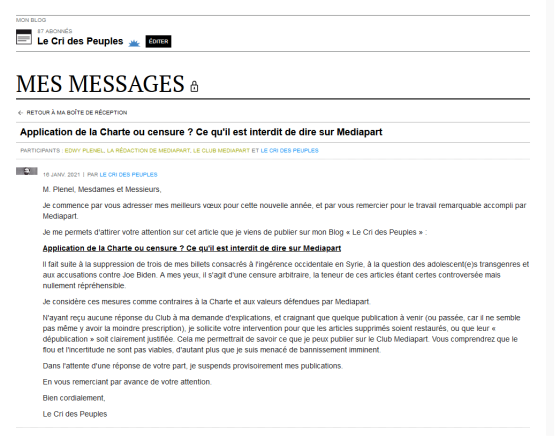


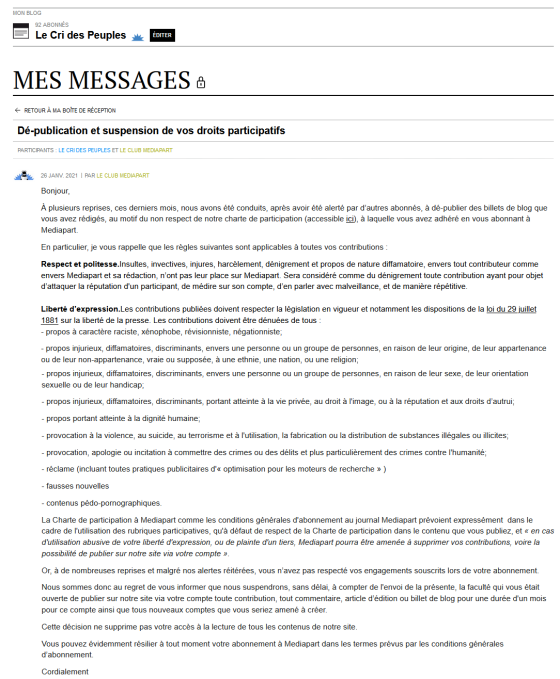

 Le livre N&B des évêques de France Sur une suggestion du cardinal Barbarin, archevêque de Lyon, à l’auteur et à l’éditeur au moment de la parution du précédent Livre noir des évêques de France (2006),
  Christus Vincit La version française du dernier livre de Mgr Schneider
 Le livre noir des évêques de France «Oserais-je vous dire que je m’interroge souvent devant Dieu sur les silences dont on pourra nous accuser dans quelques décennies ou siècles ?


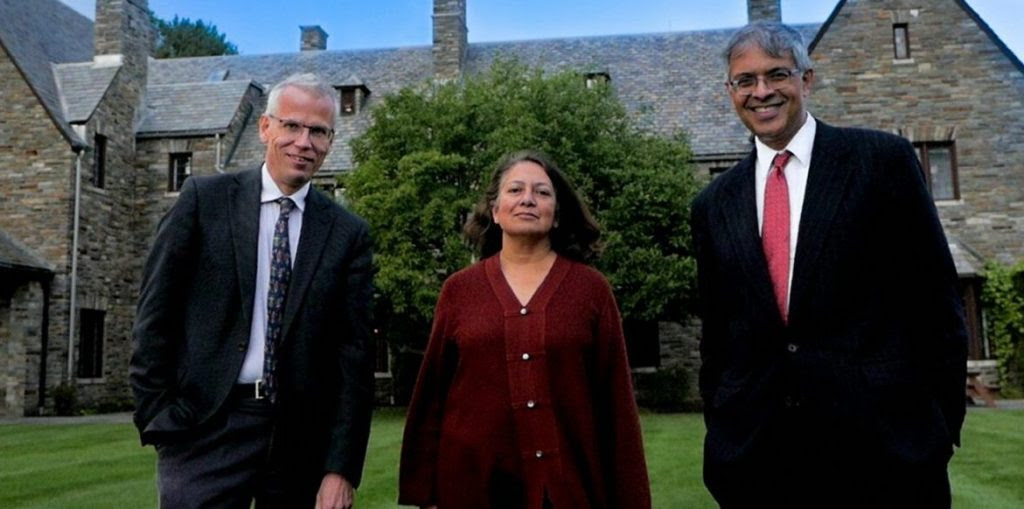
 ressources tous azimuts